There’s always someone listening!

I had a fun day on the radio yesterday. It started with the Matrix QO-100 Satellite Impromptu Net at 16:00 BST on 10489.873Mhz. A net that started off as an impromptu event that over the last couple of years has become a weekly staple. Hardly impromptu at all but, we liked the name and so stuck with it.

During the Impromptu net I noticed that my 2m radio was burbling away in the background and that a lot of European repeaters were coming through so, as soon as the net had finished I quickly switched over to my trusty Wouxun KG-UV980PL and started tuning around the 2m band.

2m was alive with repeaters from France, Belgium, The Netherlands and the UK, often beating against each other on the same frequency.

Being near the East Coast and closer to Belgium than I am to many parts of the UK I jumped onto the ON0WV repeater in Bruges. Being S9+ with me I called a few times but, no one came back to me so, I moved on.

Tuning across my Norwich Repeater memory slot I heard two French stations chatting, it was obvious they weren’t on GB3NB as the bell between overs was not the normal chime.

I quickly opened RepeaterBook on my iPhone and searched for repeaters on the same frequency, there are many!

Eventually I worked out that it was ON0HT so I quickly set about loading the repeater settings into the next available radio memory channel. I loaded a few others from The Netherlands at the same time as I was hearing more than normal from that part of the world.

2 French Operators on the ON0HT repeater in Belgium close to the French border.

Having the correct settings in place for the repeater I was now able to call in and have chat with the two stations.

Jean-Claude F5JOX and Didier F6DKO were surprised to hear an English station call in but, were most welcoming. We had a chat for a few minutes exchanging details and commenting on the great conditions. Sadly the conversation was eventually brought to an end as there were so many repeaters on the same frequency it became impossible for me to hear them clearly so, I gave them 73 and went tuning around.

The 2m band was absolutely full of UK and EU repeaters with many beating against each other on the same frequency. Wouldn’t it be nice if there was more of a split between the UK repeater frequencies and the EU allocation. Would certainly make it easier to use the EU repeaters in lift conditions.

Later in the evening Roger G8VLR, Steve M0XVT and I were having one of our Impromptu Nets on the 60m band. Often there are others from the Matrix that join in too but, on this occasion there were just the 3 of us.

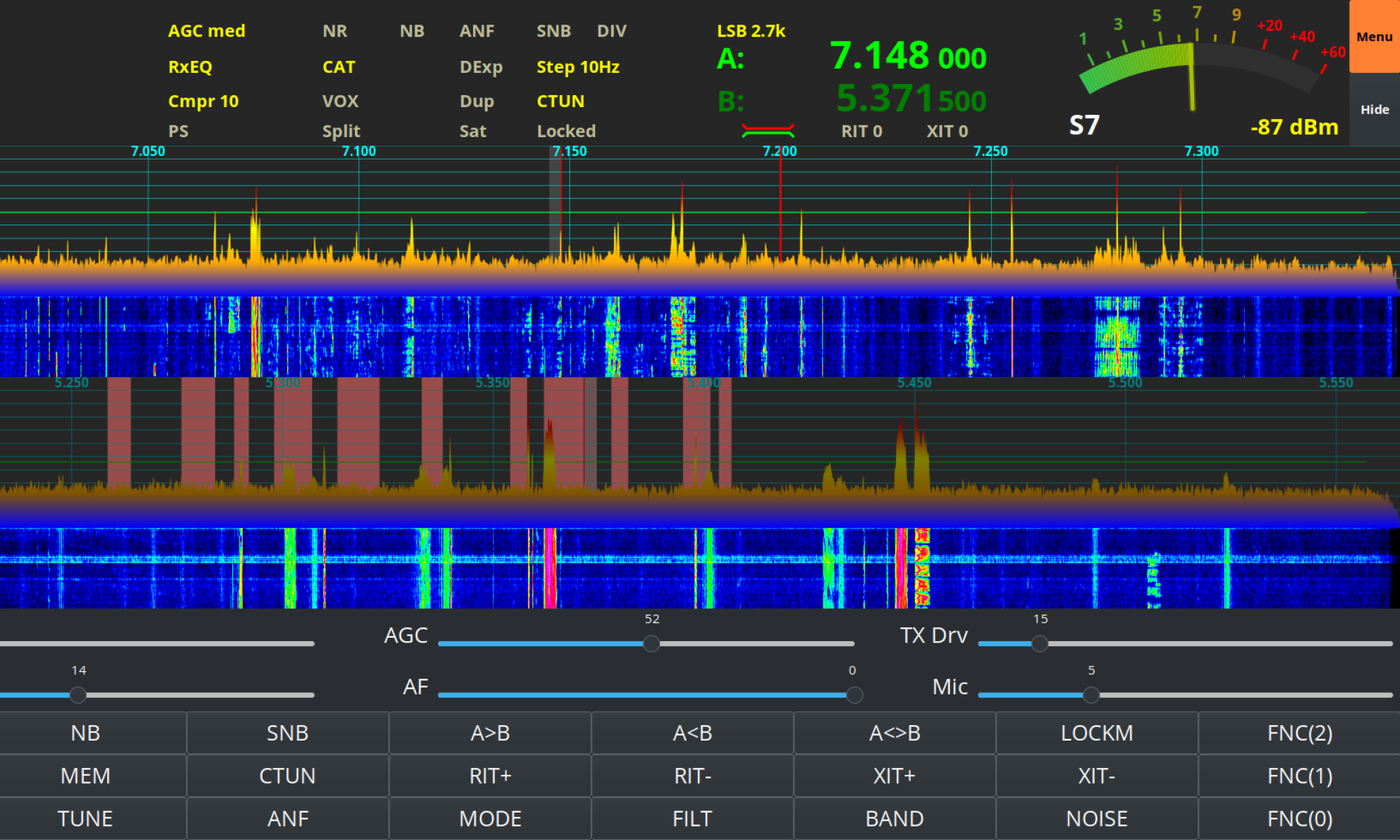
I’m acutely aware that we often have listeners to our on air chats as I quite often get emails from SWL’s and licenced HAMs commenting on how much they enjoy our conversations. Yesterday evening was no exception as it turns out that we were once again attracting listeners albeit, unbeknown to us at the time.

Later in the evening Alan, G1SQB sent me a message via the Matrix with a YouTube link to a recording of us on the 60m band from that very same evening made by @KevinOReillyswl.

Yes, that’s yours truly waffling on about satellites as normal.

Kevin O’Reilly is clearly a very active SWL as he has many interesting videos on his Youtube Channel that are worth a look.

I must confess that I’ve never heard of the MLITE-880 receiver before but, after running a search I found it to be quite a popular radio in the SWL community.

There’s a very good review on swling.com that’s worth a read.

The short video above shows it to be a surprisingly good shortwave receiver in a very compact, portable package that’s ideal for listening whilst out and about on camping trips or other outdoor activities.

A big thanks to Kevin O’Reilly for posting the video and letting us see how we sound on the other end.

More soon …

Breathing new life into a vintage receiver

Sometime back I purchased a RadioBerry HAT for my RaspberryPi 4 single board computer (SBC) to use as an experimental platform to test PiHPSDR software modifications and to test changes to the actual RadioBerry software. With these two projects completed I decided that the receiver on the RadioBerry was so good it would be a shame not to put it to good use.

RadioBerry HAT
RadioBerry HAT

For many decades I’ve been an avid Short Wave Listener (SWL) but, haven’t had a general coverage receiver for many years. The RadioBerry fills this gap in my radio lineup perfectly but, needs to be put into a suitable cabinet with speakers, display, control knobs and antenna connections.

Rather than just buy another bland square box I decided it would be nice to repurpose an old, vintage radio receiver from a bygone era and bring it into the 21st Century.

1950 Philips valve radio receiver
1946 Philips valve radio receiver

After much searching on the popular auction sites online I eventually found the perfect old receiver for the project, a vintage Philips 170A-15 valve receiver from 1946.

This lovely old Art Deco looking receiver is made from Bakelite which was an early type of plastic made from phenol-formaldehyde resin, obtained from coal tar and methanol.

The full specification for the receiver can be found on the Radio Museum Website.

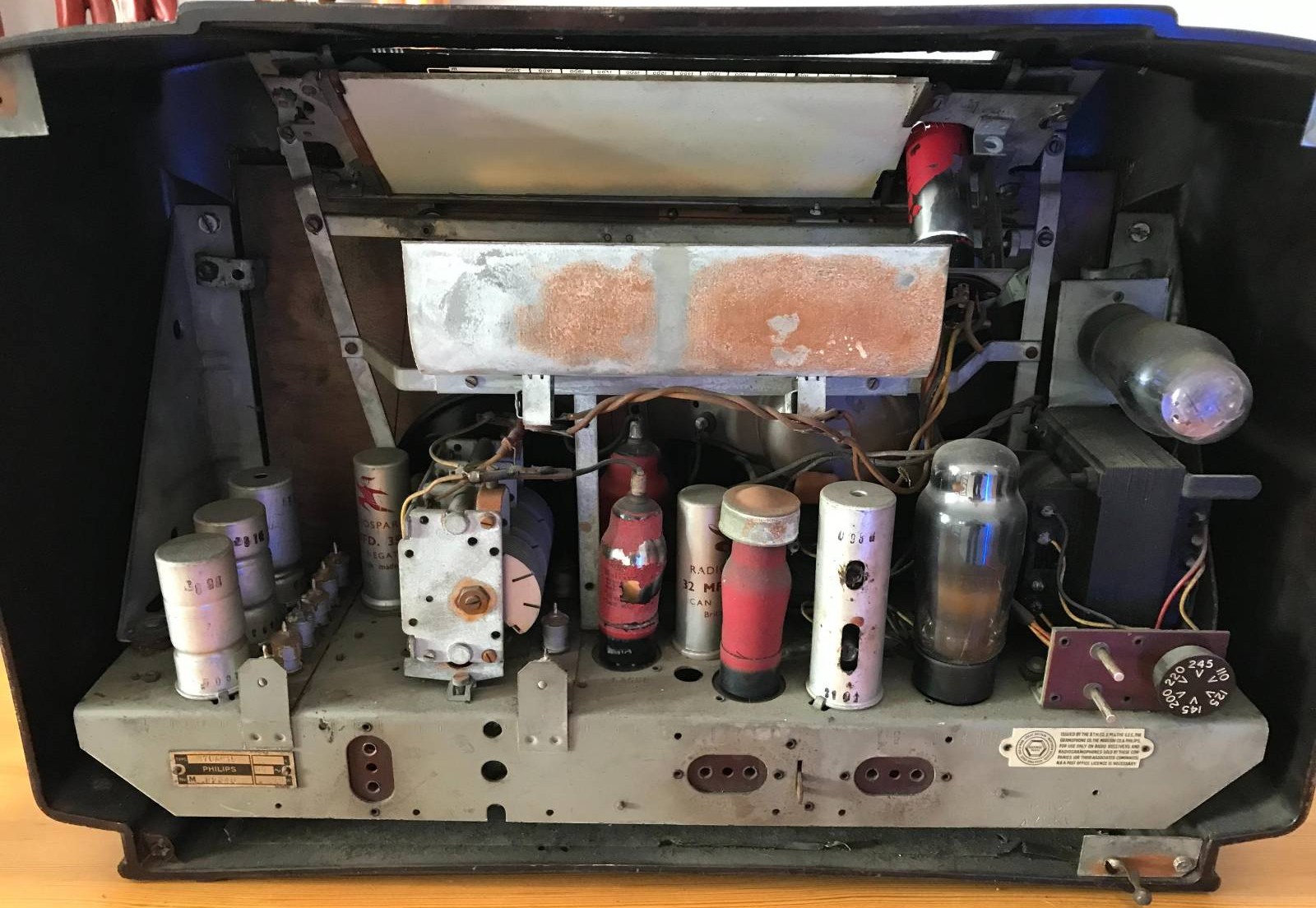
Sadly this is a non working example of this lovely old receiver and so I don’t feel so guilty stripping it out and replacing it’s internals with the RadioBerry.


Having the original serial number and Licence plate on the radio is nice, it also makes it easy to search for information about the old receiver.

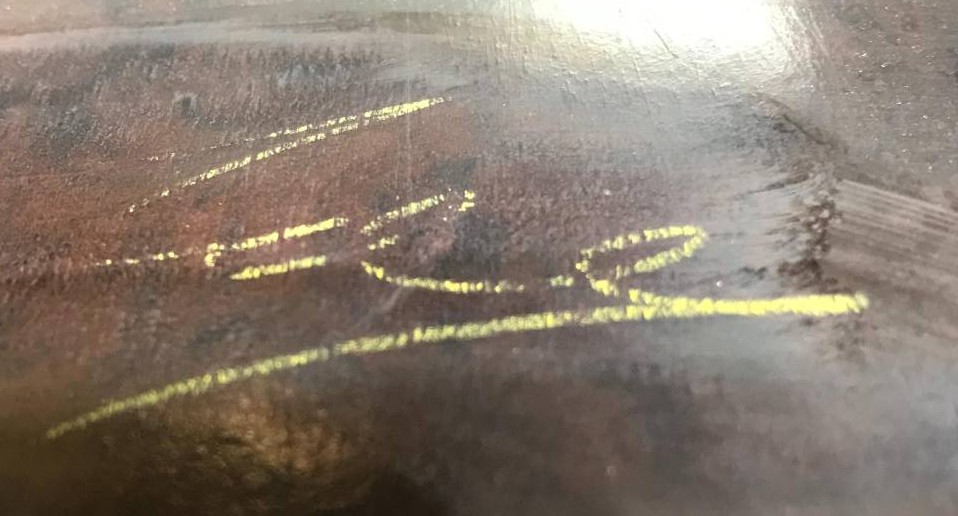
One nice thing I did discover during the disassembly of the receiver was the signature of the person that put the radio together during manufacture on the inside of the Bakelite cabinet.

1946 Philips receiver builder signature

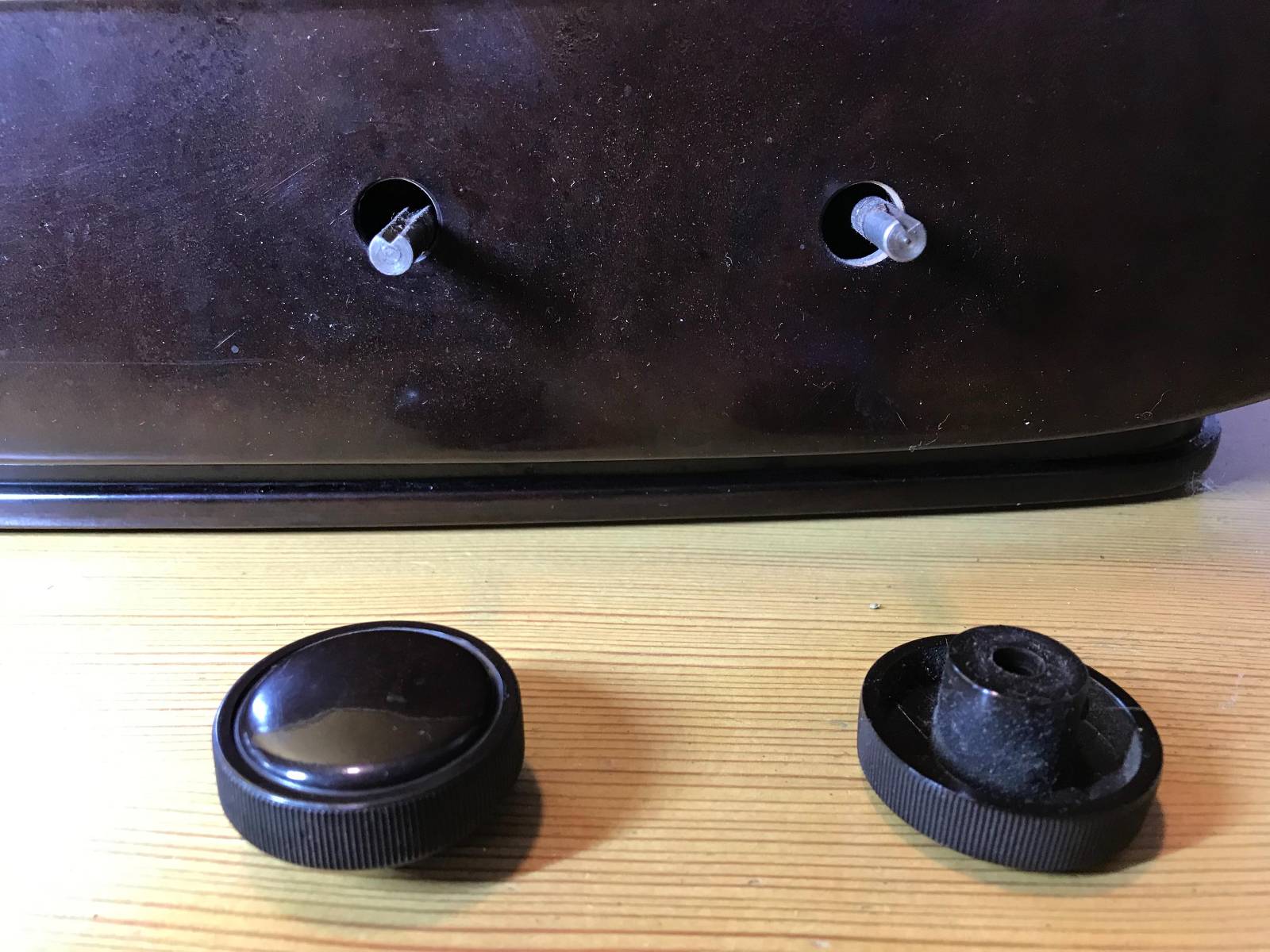
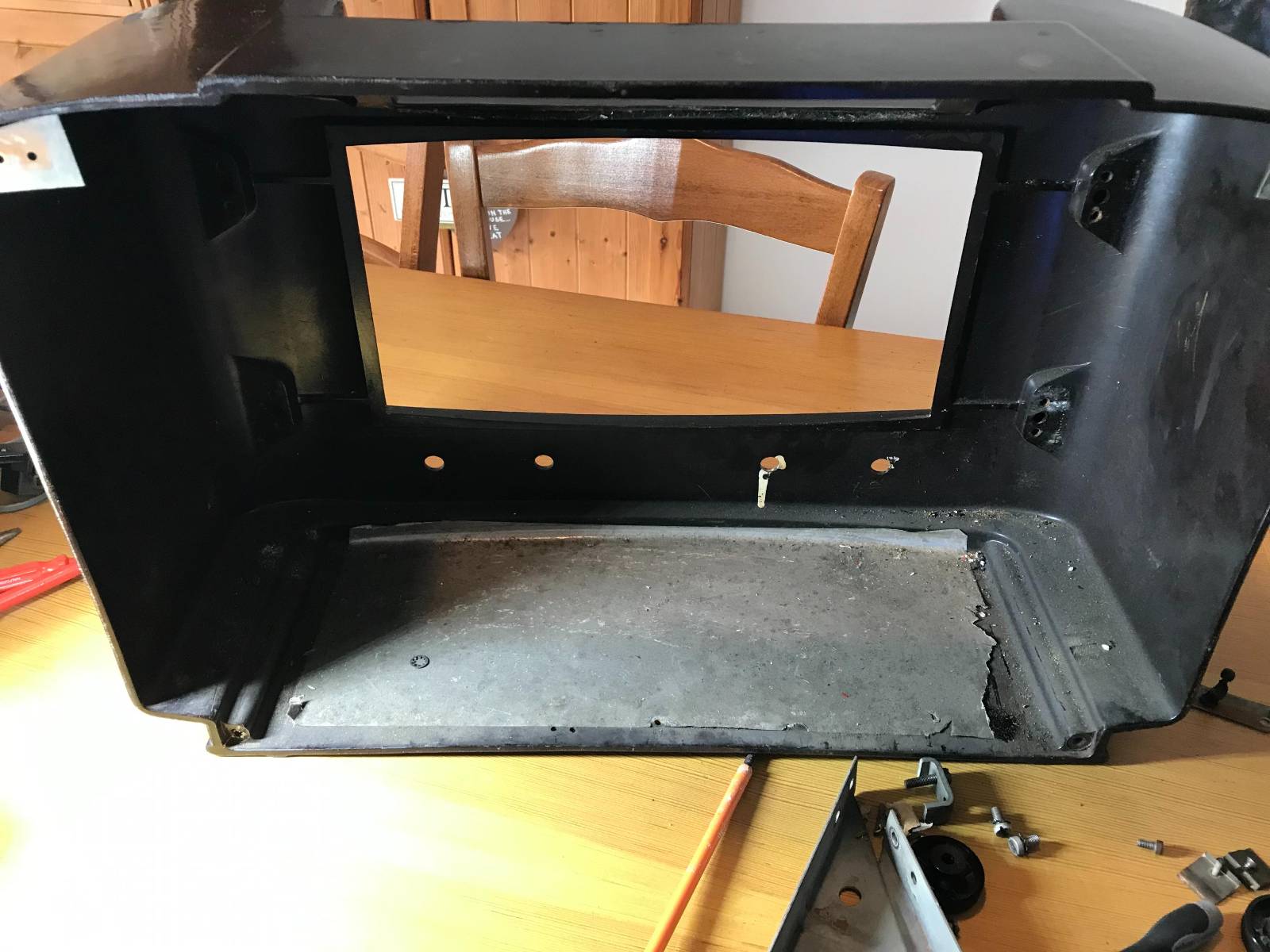
Getting the internals out of the cabinet was fun, so many little screws holding the old valve electronics and tuning display in place.

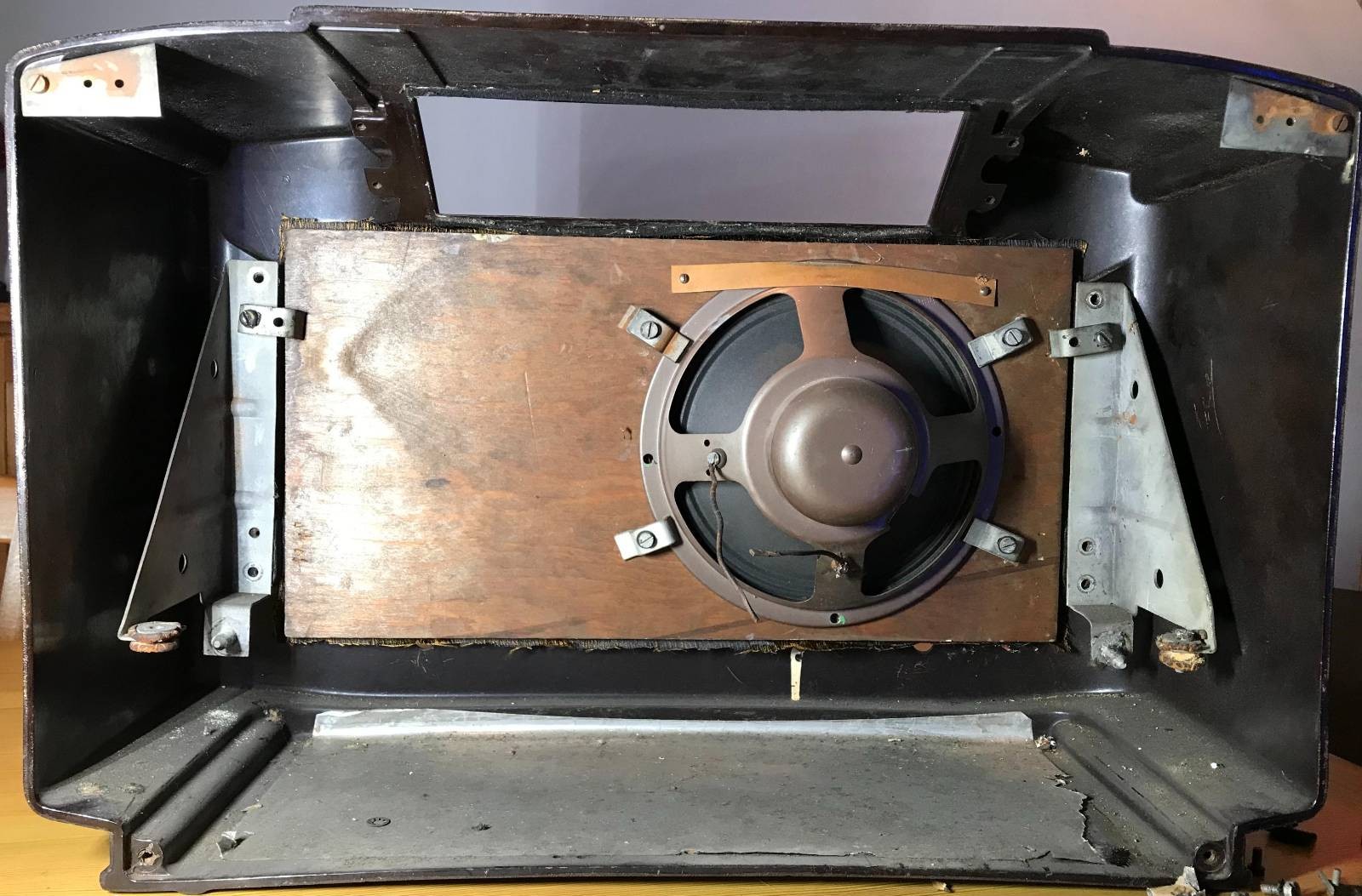
Once the electrical part of the radio was removed I gained access to the old speaker that was fitted to the front panel of the receiver. Unfortunately the speaker cone had a tear in it rendering it useless so I’ll need to get a new speaker(s) for the rebuild.

1946 Philips receiver speaker view

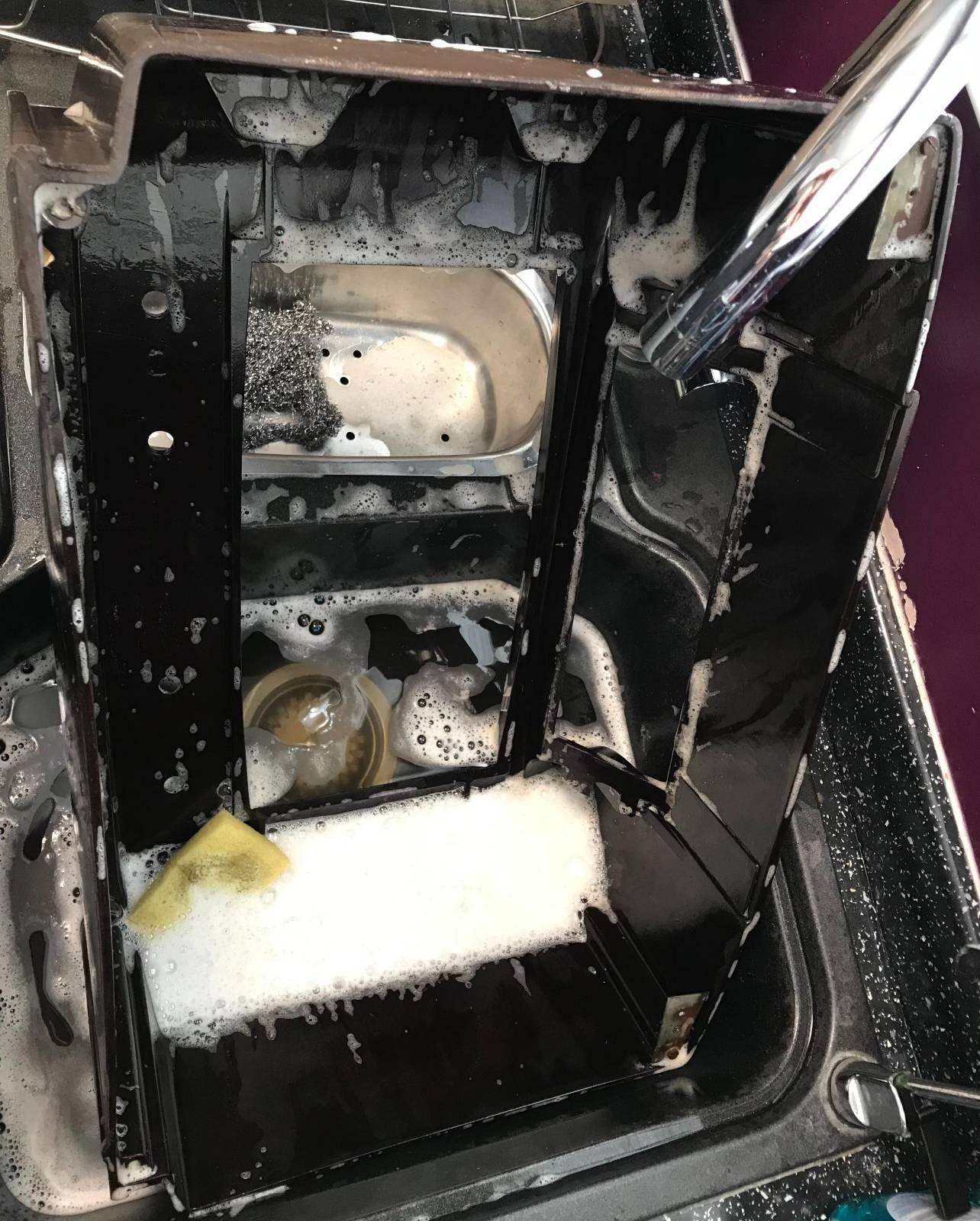
Once I got the speaker and fittings removed I set about cleaning the cabinet inside and out to remove the 79 years worth of dirt and grime that had collected within. The fascia of the receiver cabinet seems to have lost it’s shine and will need to be polished to get it back to it’s original beauty.

It took 5 lots of fresh water and washing up liquid to get the cabinet clean. The first three lots of water looked like mud in no time at all such was the state of the cabinet.

With the cabinet now cleaned and put to one side to dry thoroughly I have started to search for the best type of polish to use to put the sheen back onto it.

Once I’ve got the cabinet looking good again I’ll start fitting the new internals. I also need to find a source for a new piece of material to cover the speaker hole at the front of the cabinet as the original material is looking somewhat tired.

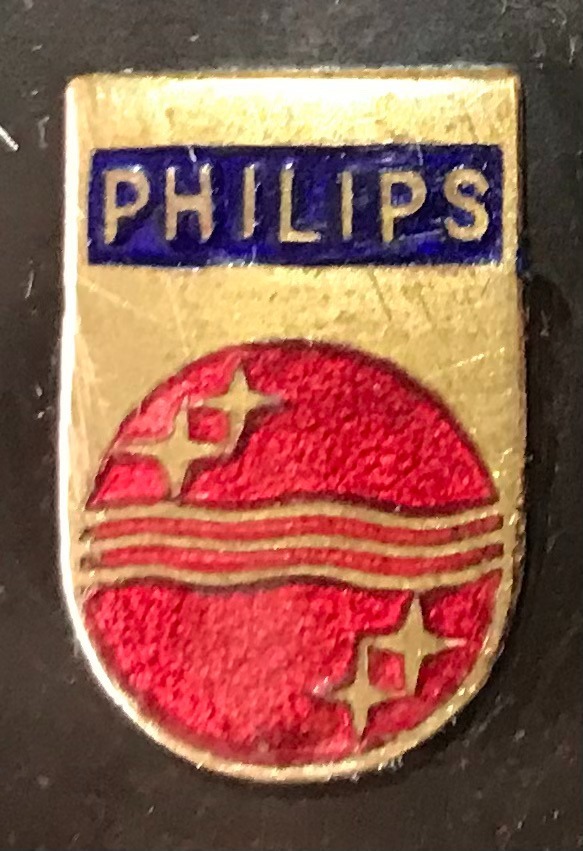
The old Philips Emblem from 1946 on the receiver case

More soon …

The Matrix HAM Radio Community continues to grow

A couple of years ago I built a Matrix Synapse server and connected it to the decentralised global Matrix chat network that is federated world wide by enthusiasts who host their own Matrix servers. Due to the enthusiasm for a decentralised network the Matrix has grown exponentially and is now an established force in the world of Opensource global communication services.

When I built my server and configured it online my aim was to bring together an enthusiastic group of Radio Amateurs (Radio HAMs) who could build a friendly, welcoming community where people could share, learn and have fun with other liked minded individuals without all the nonsense you see on commercial social media platforms.

Overtime we’ve increased the number of rooms available in the HAM Radio space and the number of subjects covered. This has grown organically as our community has grown and we’ve ventured together into new areas of the hobby.

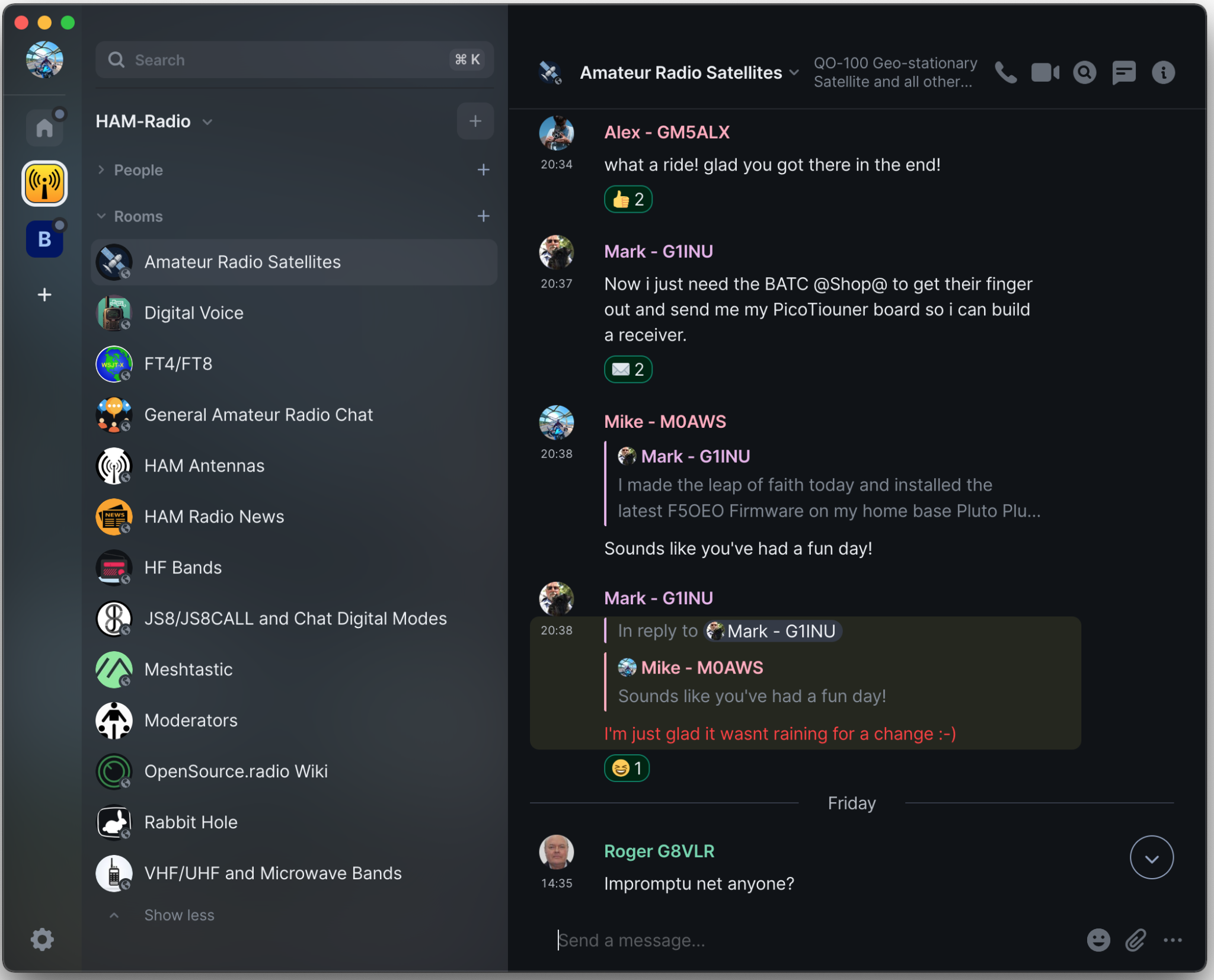
Global Matrix Ham Radio Space hosted on the M0AWS Matrix Server

From the community a number of projects have spawned including the Opensource.radio Wiki that Mike, DK1MI is sponsoring that aims to detail all the Opensource HAM Radio software, Hardware and projects in one centralised site on the internet. This is a great project and one I am very happy to contribute to.

Thanks to Mike, DK1MI we now also have our own Matrix AllStarLink node available. This is a great resource for the community as it is often not possible for all of us to communicate via the radio waves due to geo-location, time zones, local planning regulations etc. Having this 24/7 internet based resource makes it a lot easier for the community to chat at any time even when propagation on the HF bands isn’t in our favour.

Mike, DK1MI has written an excellent article on the Matrix AllStarNode and more, I highly recommend you take a look at it.

We also have a very active satellite room with regular nets on the QO-100 satellite. With such a great range of rooms and subjects there’s plenty to read and talk about with the community.

If you fancy being part of this growing, enthusiastic group of Radio Amateurs and Short Wave Listeners (SWLs) then click on the link below and come and say hello, a warm welcome awaits!

https://m0aws.co.uk/matrix

More soon …