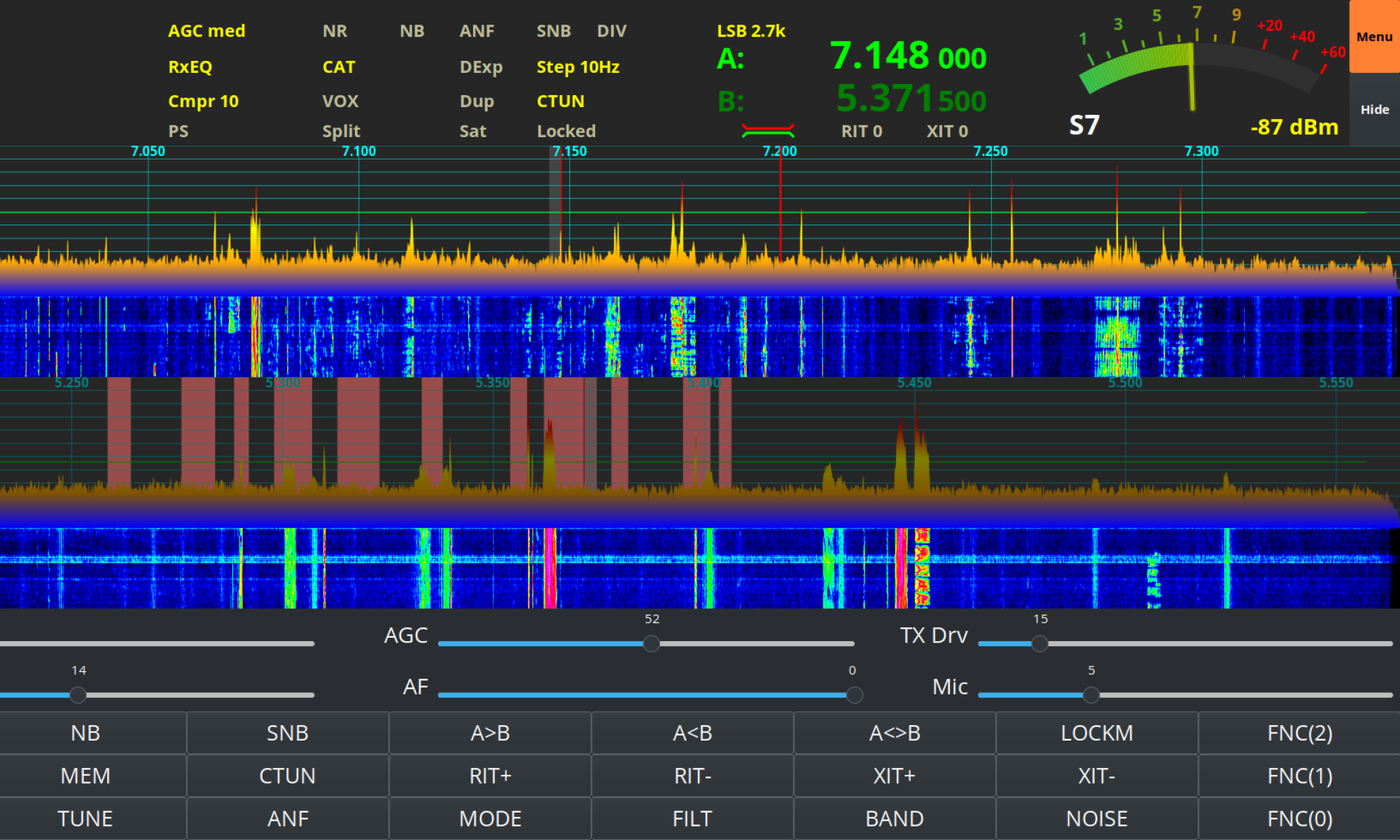
Yesterday morning I ventured up onto the 20m band and to my surprise, found that the band was open to inter-G, unusually short skip for the 20m band.
Wanting to take advantage of the conditions I kicked off with a QSO with David, MI0AIH in Cookstown Northern Ireland. With 59+ signals both ways, it was like being on 40/60/80m with a crystal clear path between us.
Next was GB0BBF operating POTA GB-0619, again 59 both ways and a really easy contact.
My third contact was with Aled, MW0UPH who was parked up in his car on a hill in North Wales. The path between us was incredibly good. With 59 signals both ways and an FM like arm chair copy, we chatted for a few minutes making the most of the short skip.
Aled very kindly made a quick video of our conversation and sent a copy over to me to watch. It’s always nice to hear what you sound like on the other end.
M0AWS as heard by MW0UPH on the 20m Band
Unfortunately I didn’t think to make a video of the conversation at my end but, it was exactly the same, crystal clear arm chair copy, just like a 2m FM contact.
It was great fun working UK stations on a band that I would normally only ever hear EU and DX stations. It was interesting to note that Inter-G on 40m was really poor at the same time.
I had a fun day on the radio yesterday. It started with the Matrix QO-100 Satellite Impromptu Net at 16:00 BST on 10489.873Mhz. A net that started off as an impromptu event that over the last couple of years has become a weekly staple. Hardly impromptu at all but, we liked the name and so stuck with it.
During the Impromptu net I noticed that my 2m radio was burbling away in the background and that a lot of European repeaters were coming through so, as soon as the net had finished I quickly switched over to my trusty Wouxun KG-UV980PL and started tuning around the 2m band.
2m was alive with repeaters from France, Belgium, The Netherlands and the UK, often beating against each other on the same frequency.
Being near the East Coast and closer to Belgium than I am to many parts of the UK I jumped onto the ON0WV repeater in Bruges. Being S9+ with me I called a few times but, no one came back to me so, I moved on.
Tuning across my Norwich Repeater memory slot I heard two French stations chatting, it was obvious they weren’t on GB3NB as the bell between overs was not the normal chime.
I quickly opened RepeaterBook on my iPhone and searched for repeaters on the same frequency, there are many!
Eventually I worked out that it was ON0HT so I quickly set about loading the repeater settings into the next available radio memory channel. I loaded a few others from The Netherlands at the same time as I was hearing more than normal from that part of the world.
2 French Operators on the ON0HT repeater in Belgium close to the French border.
Having the correct settings in place for the repeater I was now able to call in and have chat with the two stations.
Jean-Claude F5JOX and Didier F6DKO were surprised to hear an English station call in but, were most welcoming. We had a chat for a few minutes exchanging details and commenting on the great conditions. Sadly the conversation was eventually brought to an end as there were so many repeaters on the same frequency it became impossible for me to hear them clearly so, I gave them 73 and went tuning around.
The 2m band was absolutely full of UK and EU repeaters with many beating against each other on the same frequency. Wouldn’t it be nice if there was more of a split between the UK repeater frequencies and the EU allocation. Would certainly make it easier to use the EU repeaters in lift conditions.
Later in the evening Roger G8VLR, Steve M0XVT and I were having one of our Impromptu Nets on the 60m band. Often there are others from the Matrix that join in too but, on this occasion there were just the 3 of us.
I’m acutely aware that we often have listeners to our on air chats as I quite often get emails from SWL’s and licenced HAMs commenting on how much they enjoy our conversations. Yesterday evening was no exception as it turns out that we were once again attracting listeners albeit, unbeknown to us at the time.
Later in the evening Alan, G1SQB sent me a message via the Matrix with a YouTube link to a recording of us on the 60m band from that very same evening made by @KevinOReillyswl.
Yes, that’s yours truly waffling on about satellites as normal.
Kevin O’Reilly is clearly a very active SWL as he has many interesting videos on his Youtube Channel that are worth a look.
I must confess that I’ve never heard of the MLITE-880 receiver before but, after running a search I found it to be quite a popular radio in the SWL community.
There’s a very good review on swling.com that’s worth a read.
The short video above shows it to be a surprisingly good shortwave receiver in a very compact, portable package that’s ideal for listening whilst out and about on camping trips or other outdoor activities.
A big thanks to Kevin O’Reilly for posting the video and letting us see how we sound on the other end.
Checking the ISS pass data I could see it was going to be a good pass for me to listen and so I setup my Wouxun KG-UV980P quad bander on 145.800Mhz to see if I could hear Jack.
Having only a Diamond V2000 vertical antenna, I don’t have the best station for satellite communications however, it has worked well in the past.
Sure enough, as the ISS approached the UK from the South West and reached 2deg above the horizon the signal started coming through. Below is the video I took of the pass.
I ended the video at 6min and 35sec as I thought I’d lost the satellite as it was out to the East over Russia and blocked by farm buildings near my QTH however, once I stopped videoing I remembered to move the VFO down 5Khz and sure enough I was able to hear the ISS right up until the point that Jack signed and ended the QSO.
I really should try to see if I can get some QSO’s via the ISS FM Repeater as the received signal really is very good. Whether the transmitted signal would be as good remains to be seen.
For some time I’ve wanted a full duplex 2m/70cm handheld so I could have a go at working the LEO FM satellites during the summer months from the garden.
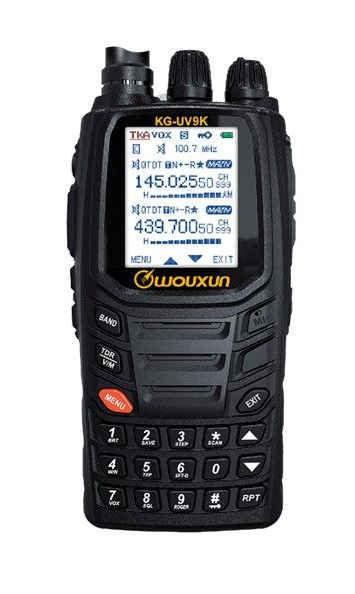
Searching through all the handhelds available today I came across the Wouxun KG-UV9K dual band, full duplex VHF/UHF radio.
Since I already own a Wouxun KG-UV980PL Quad bander (6/4/2m & 70cm) I’m familiar with the menu system and the very good build quality so I decided to research it further.
Wouxun KG-UV9K Full Duplex Handheld
Looking at the spec for the handheld it does everything I want and more whilst being reasonably priced.
Jumping onto the Martin Lynch and Sons website I found there were two listings, the radio on its own or the “Pro Pack”.
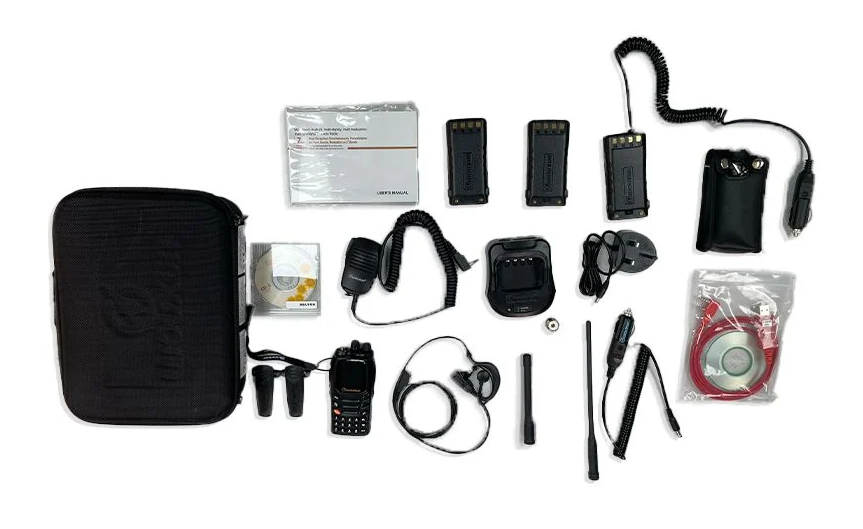
The radio on its own was £79.00 but, the Pro Pack was only £20 more at £99.00 and came with every option available for the handheld including a programming cable, 2 batteries and a rather nice carry case.
Wouxun KG-UV9K Pro Pack
The full specification and other details for the “Pro Pack” can be found on the ML&S website but, here’s a brief summary:
Pro pack contains:
KG-UV9K Transceiver with 2 antennas
Two batteries Two belt-clips Software and transfer data Cable Fast charger dock and Power Supply Hand speaker mic Battery eliminator Manual Wrist strap Leather case In-car charger SMA-SO239 adaptor Hands-Free kit
Like my Wouxun quad bander the handheld can also be configured as a cross-band repeater, something I’ve not yet found a use for but an interesting feature. Of course being a full duplex radio with two receivers you can listen to signals on 2m and 70cm simultaneously or transmit on one and listen on the other, a feature I’ve wanted for LEO satellite operations.
The radio is really easy to programme using CHIRP and easy to setup via the very logical menu layout. The hand held has a good solid feel to it and I’ve found the battery lasts a good 3-4 days even though I use it to chat with other stations via my AllStarLink node most mornings and the radio is left monitoring all day.
The larger of the two supplied antennas works extremely well having a relatively good gain. I can now easily get into my two local repeaters on 2m & 70cm from within the house, something I’ve never been able to do with my old Retevis RT85 even with a high gain antenna on it.
The receivers in the UV9K are head and shoulders better than that of the Retevis RT85, I’m hearing signals much stronger now and can even get into repeaters that I’ve never even heard on the old Retevis handheld.
The display on the Wouxun is bright and easy to read, even in bright sunshine which is great as I plan to use it outside a lot during the summer months.
The supplied speaker mic gets good unsolicited audio reports on transmit and has clear audio on receive with plenty of volume. The speaker mic doesn’t have any radio control buttons on it sadly, something I really like about the Wouxun UV980PL quad bander as you can control every aspect of the radio without touching the front panel. Would be a nice upgrade for the handheld if it every became available.
Overall I’m really impressed with the Wouxun UV9K Pro Pack. The radio performs very well, comes with every optional extra available and is a bargain at just £99.00.
If you’re looking for a full duplex handheld radio then I recommend you grab the Pro Pack before the offer ends.
I’ve not been on the radio much over the last few weeks as I’ve had my head down other radio related rabbit holes.
One of the rabbit holes is a Node-Red project to make my online logs a little more interactive. For sometime now my logs have been displayed on my website as nicely formatted, searchable HTML pages however, they don’t really allow the viewer (myself included) to see the global coverage of all the contacts so, I decided to write a Node-Red flow that would do just that.
M0AWS Interactive Log Flow
The flow itself isn’t too complicated and basically consists of reading in the individual ADIF formatted log files, processing the data and then sending the data in the correct format to the map node for display.
I’ve had to write a few functions to handle the processing of the ADIF formatted data but, these aren’t particularly complex and are fairly easy to understand even if like me, you’re not a Javascript programmer.
The flow is working perfectly however, I’m in the process of reworking the format generic payload function to reduce the amount of code and make it more efficient.
M0AWS SSB / CW / FreeDV Interactive Log World Map
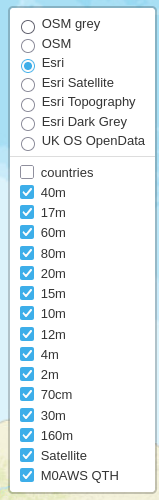
M0AWS Interactive Log Map Layers Menu
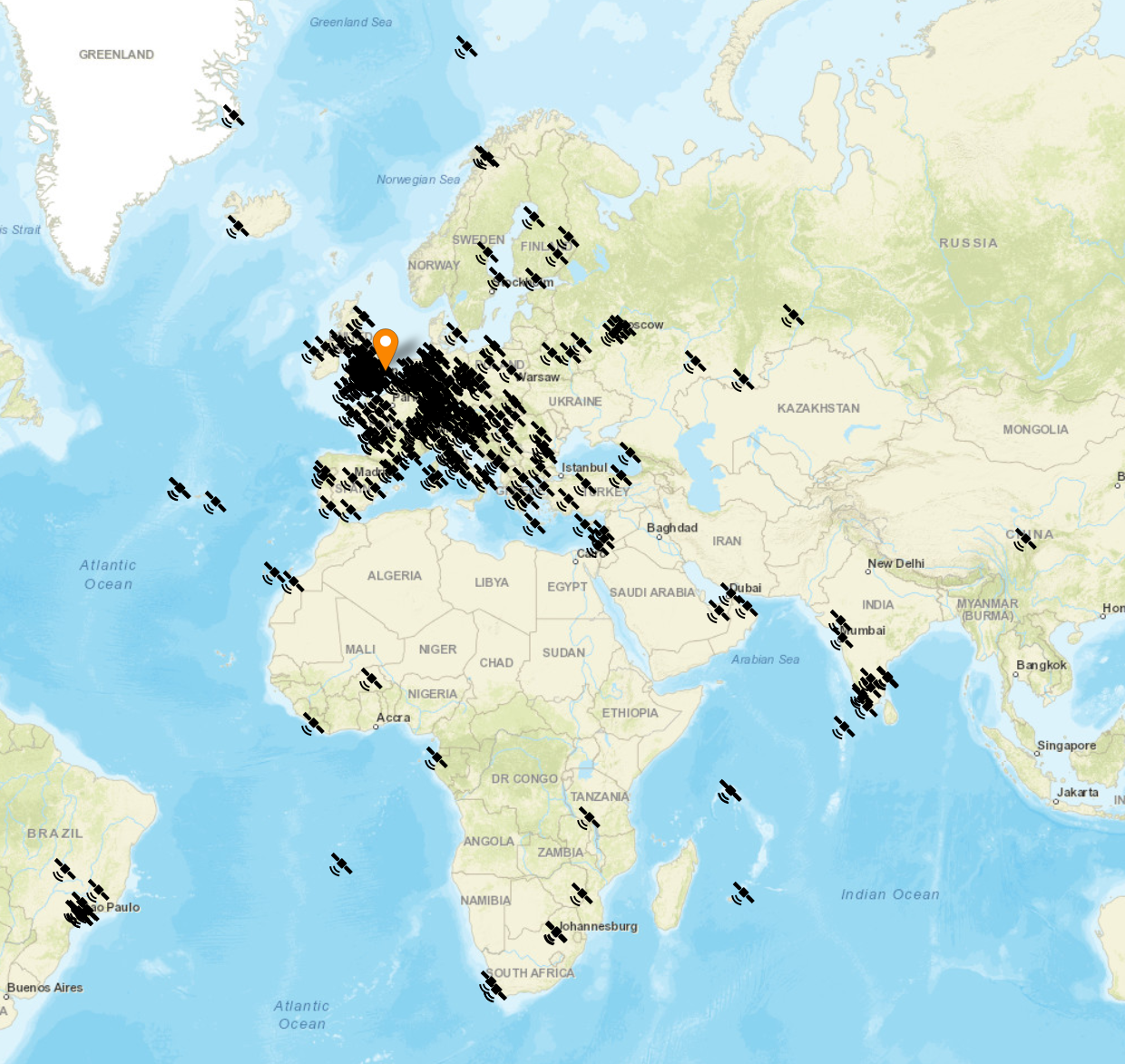
The flow generates two maps, one for voice / CW /Satellite contacts and the other for WSJT-X FT4/8 contacts. Every pin on the map is colour coded by band with satellite contacts being denoted by a satellite icon.
Each pin / icon on the map is clickable and reveals the data of the QSO being displayed.
In the top right-hand corner of the map there is a drop down layermenu that allows the viewer to filter by band thus reducing the number of icons on the screen at any one time.
Seeing the data presented on a map really brings my logs alive. An example of this is that I had no idea I’d worked so many stations in India on the QO-100 Satellite.
The small icons in the pins show a microphone for SSB/FM/FreeDV contacts and a downwards pointing triangle in a box for CW contacts. Sadly I couldn’t find a Morse key icon in the collection available.
M0AWS filtered view of QO-100 Satellite contacts
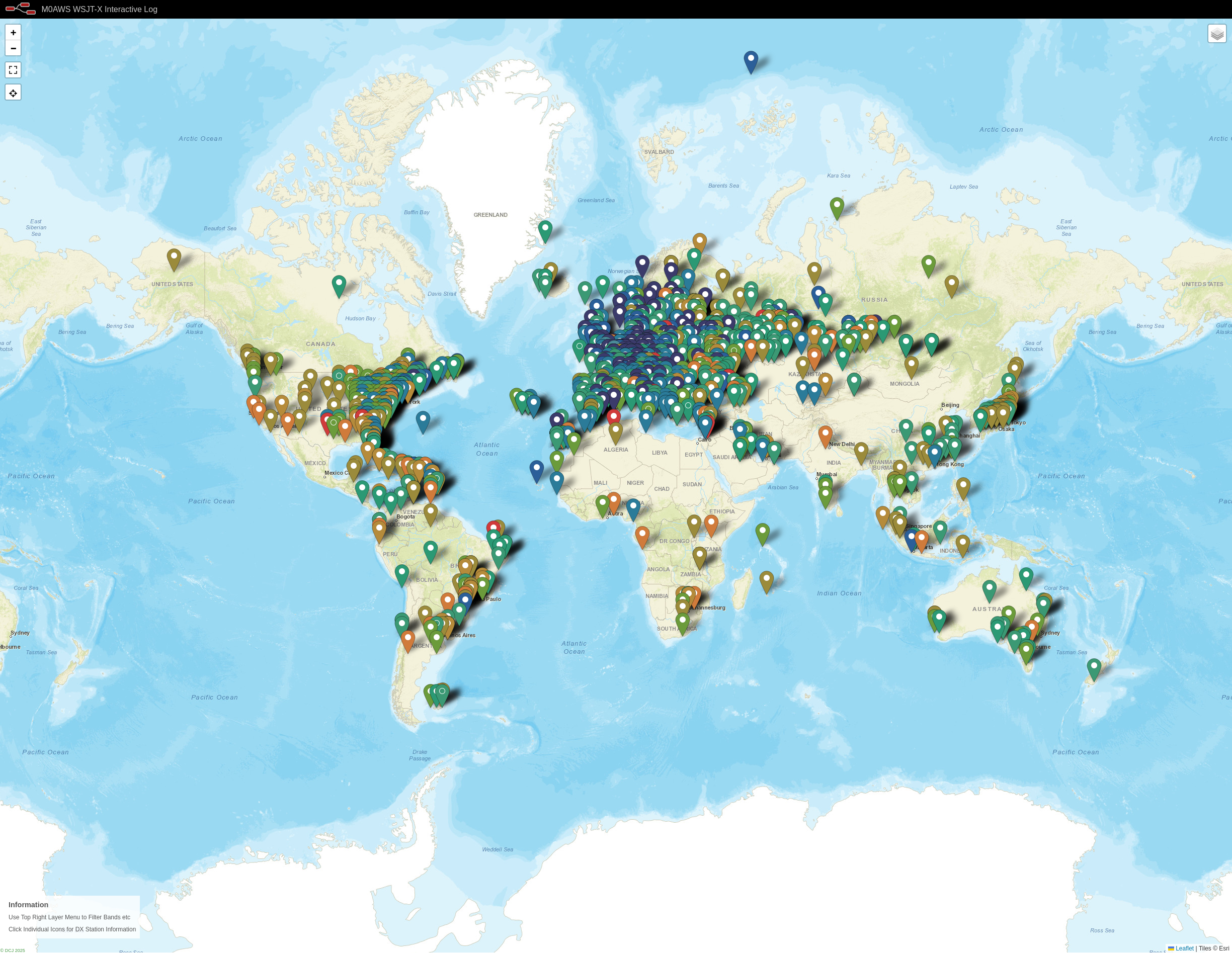
I only use FT4/8 for testing new antenna designs however, it’s interesting to see the global coverage accomplished with this weak signal mode.
M0AWS WSJT-X FT4/8 Interactive Log World Map
Once I’ve finished rewriting the format generic payload function I will make the flow available for download here so that others can also create an interactive view of their radio logs.
If you want to have a look at the maps and try them out for yourself, they are available under the Logs menu above.
This Node-Red instance is running in a virtual machine (VM) on a 16GB RAM RaspberryPi 5 that is also running a number of other VMs at the same time so, it’s safe to say it’s not heavy on CPU and will run on the older Pi4 as well.
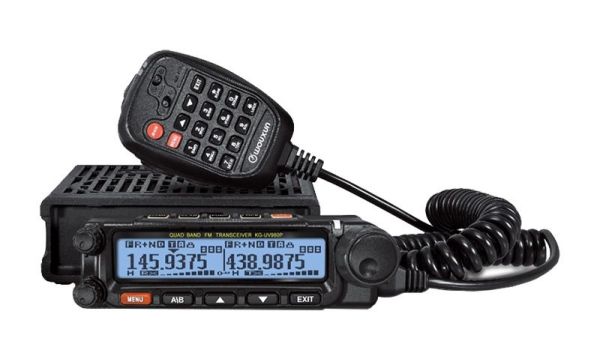
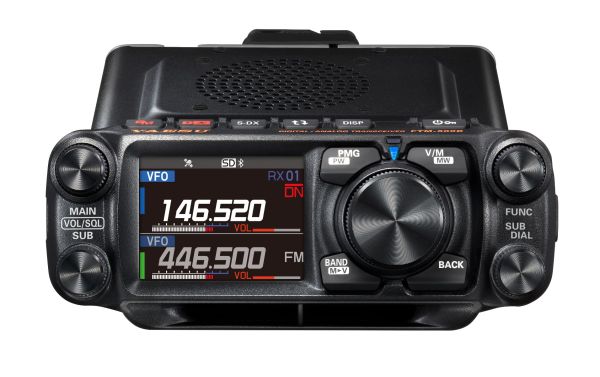
I recently decided to look into a 2m/70cm FM radio for the shack for use on the local 2m/70cm repeaters and was considering the offerings from Yaesu and Icom however, the Wouxun KG UV-980PL caught my eye as it is a quad band, full duplex radio. Not knowing much about Wouxun radios I had to do some research to get an idea of what it’s like. Generally the radio gets very good reviews and most mention the excellent build quality.
There are two versions of the 980P radio, the 980PL that offers 6/4/2m and 70cm bands and the 980P that offers 10/6/2m and 70cm. The 4m is a band I’ve been wanting to try for some time and the 980PL with it’s 4m band coverage became even more appealing.
Wouxun KG UV-980PL Quad Band FM Duplex Transceiver
I decided to take a trip down to Martin Lynch and Sons (MLANDS), a good 2 hours or more drive for me, so that I could get hands on with the radios that I had been looking at.
I invited Alan, G1SQB along for the ride and a day out playing with radios as he lives 3 miles away and we often chat on air.
Arriving at the store we grabbed a hot brew and set about playing with the great selection of radios on display.
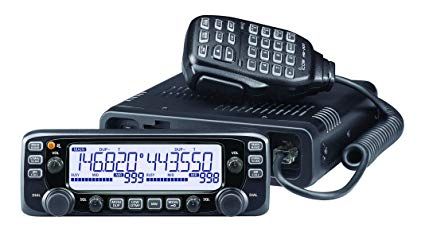
I initially looked at the Icom IC-2730E, a dual band full duplex transceiver that has been around for about 10 years and has good reviews. As expected the build quality is excellent and very easy to use. I found I was soon able to set up memories etc via the front panel controls. The only draw back is that it isn’t supported by the CHIRP programming software that I use. Other than that it certainly meets all the requirements for a 2m/70cm FM transceiver
Icom IC-2730E FM Duplex Transceiver
Next I moved on to the offerings from Yaesu including the FTM-500DE 2m/70cm transceiver. The colour screen is very nice and the menu system very easy to use however, the price is getting on for close to double that of the other radios and it doesn’t really offer anything more that interests me since I’m only looking for an analog radio.
Yaesu FTM-500DR dual band FM Transceiver
Sadly there wasn’t a Wouxun UV-980PL out on display and so I had to persuade the salesman to get one out of stock for me to play with. Unpacking the radio I was surprised at how good the build quality is, it really is comparable to the other radios that I had been looking at.
The Wouxun menu system is fairly easy to use once you’ve looked at the manual and got to grips the abbreviations used. The big plus is that this radio is CHIRP compatible with an optional programming cable (£19) and so loading the memories with repeaters etc will be extremely easy.
The Wouxun has dual receivers built in with a quad-plexer so, you can transmit on one band whilst listening to another band on the other receiver. One thing to note is that the 1st receiver covers all the bands, 6/4/2m and 70cm however, the 2nd receiver only covers 2m and 70cm so, it’s not possible to receive 4m and 6m at the same time. The radio also only has one antenna connection on the rear, would had been great if it had one connector for each receiver.
The really good thing about the Wouxun UV-980PL is that it comes with everything you will need, apart from the programming cable!
After much tinkering I decided to purchase the Wouxun KG UV-980PL, a Diamond V2000 6/2m and 70cm antenna plus 20m of Hyperflex-13 coax cable and connectors.
In the box you’ll find two mounting options for the removable head. There is a short connecting cable for use when the head is mounted directly on the radio body and a 5m long connecting cable for mounting the head remotely. This is really useful as I wanted to mount the head on a mic boom arm so that it’s easily accessible and didn’t clutter the desk space in the shack.
Wouxun KG UV-980PL head mounted on a Mic boom arm
Since the radio also comes with the mobile mount I’ve fixed the radio body on the wall behind the PC monitor out the way. This setup has proven to be extremely good as I can see what’s happening on the display at a glance and easily grab the mic if called.
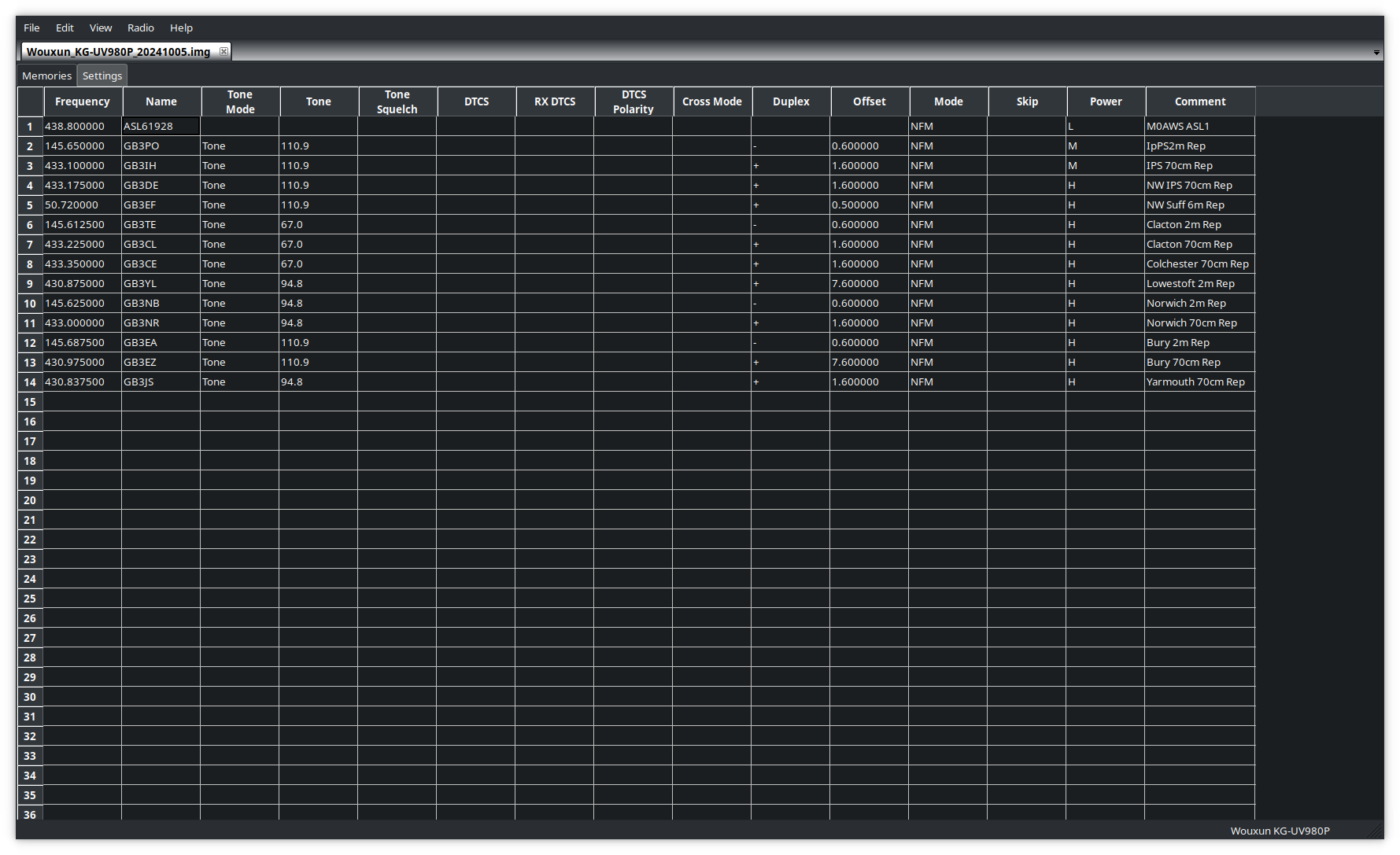
Programming the radio memories is extremely quick and easy using CHIRP. I had the local repeaters and my AllStarLink node frequencies and offsets uploaded to the radio in no time at all and was soon on air.
Programming the memories on the Wouxun UV-980PL using CHIRP
The microphone that comes with the radio is extremely good. You can operate most of the controls on the radio directly from the mic with ease and it has a good feel in the hand. Audio reports have also been very good and there’s no need to change it.
I’ve not yet got the new Diamond V2000 antenna erected but, I’ve been using the radio with my homebrew 2m/70cm end fed vertical dipole and my 4m band end fed vertical dipole and am getting excellent results. I can access all the local repeaters using the lowest power output setting and only have to use the medium/high setting for the repeaters that are further afield.
On the 4m band the radio performs well and I’ve been surprised at the distances I’ve been able to cover even though my 4m antenna is only 6-7m above the ground currently.
A few days after I got the new Wouxun radio there was an ARISS event whereby a group of Girl Guides would be talking to Astronaut Sunita Williams aboard the ISS. This was a great opportunity to test the receive capability of the radio and so I setup ready for the pass. Using just my simple 2m/70cm end fed vertical dipole I got great reception as can be heard in the video below.
Overall I’m extremely pleased with the Wouxun KG UV-980PL quad band radio and considering it’s much cheaper than the offerings from the main radio manufacturers it’s well built and performs extremely well. If you’re looking for a simple, analog FM radio for 6/4/2m/70cms then you can’t beat it!
Following this a number of girl guides posed questions which were very quickly answered as the ISS passed overhead.
Using my new Wouxun UV-980PL and simple end-fed vertical dipole I got a great signal from the ISS HAM radio station and was able to receive the ISS side of the conversation as the space station approached the N/W Coast of Spain until it eventually dropped below the horizon out of site nearing East Russia.
Below is a short video clip with audio showing the clarity of reception. The ISS peaked at an S9 signal, it was a perfect pass for the special event.
I’m hoping to put up a better antenna for 2/4/6m & 70cm in the next few days so that I can start joining the local nets on these bands and perhaps get contacts through a few more of the FM Low Earth Orbit (LEO) satellites.
I’ll also be writing a full article on the Wouxun KG UV-980PL in the very near future, so if this radio is of interest to you then watch this space.
More soon …
We use cookies to ensure that we give you the best experience on our website. If you continue to use this site we will assume that you are happy with it.