300hz Filter for the Yaesu FTDX10

Since purchasing my new Begali Pearl morse key I’ve been wanting to install the 300hz CW filter into my Yaesu FTDX10. The radio comes standard from the factory with the 500z CW filter preinstalled however, being able to narrow the bandwidth down even further will help to reduce the ringing effect on noisy bands that often plaques CW Ops when trying to catch those very weak DX signals.

Since I had built up some free credit at ML&S by buying all my new radio equipment I decided to put it to good use and put it towards the cost of the optional 300hz filter for the radio.

In years past when I had a Yaesu FT1000MP I installed a full set of filters in it and it made quite a difference DXing on the 160/80/40m bands. Back then things like digital noise reduction (DNR) were in their infancy and so narrow filters were even more important than they are today.
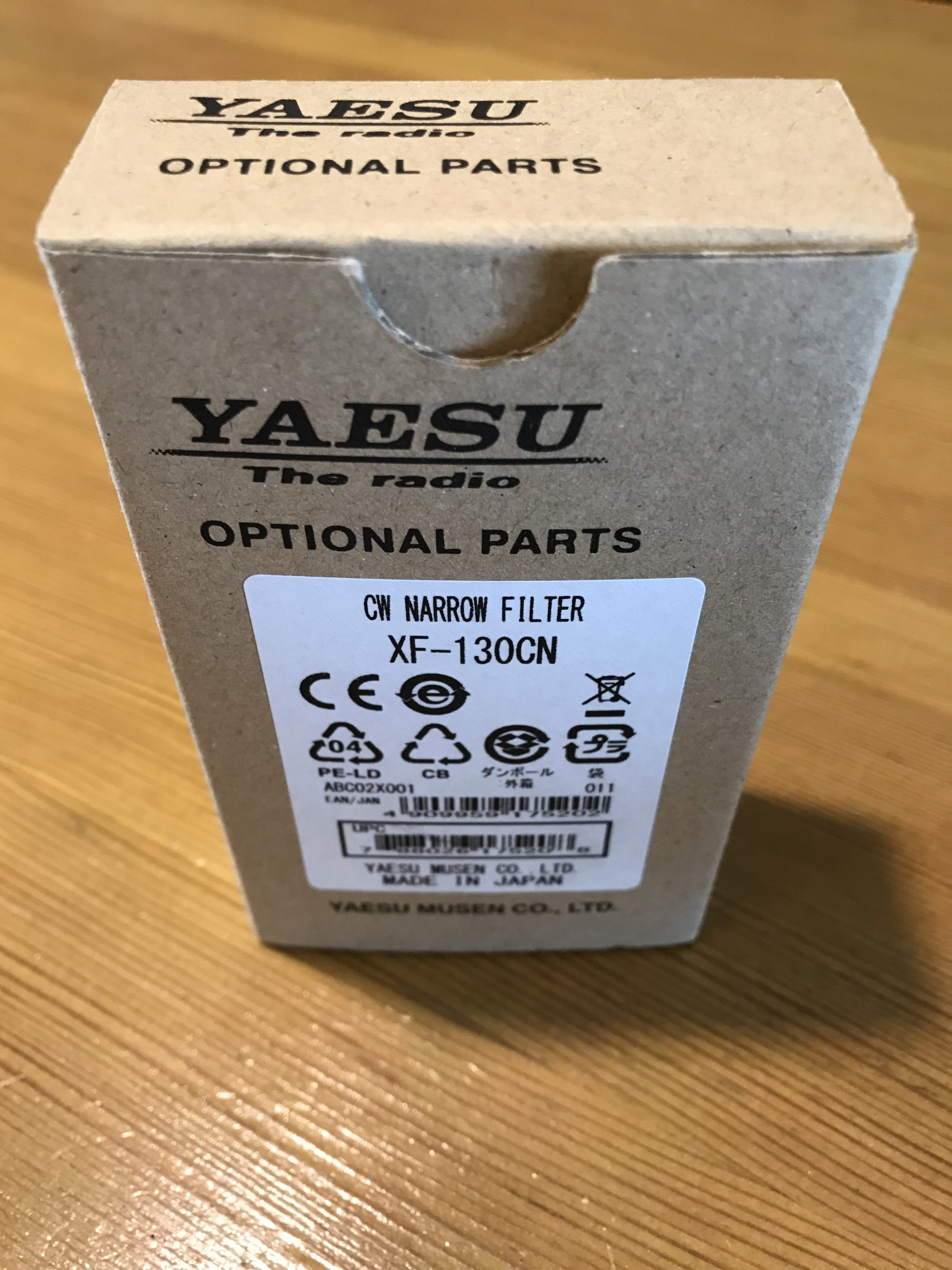
Yaesu XF-130CN 300hz CW Filter for the FTDX10

The FTDX10 300hz filter looked very similar to the ones I fitted in the FT1000MP and it doesn’t look like they’ve changed at all over the years.
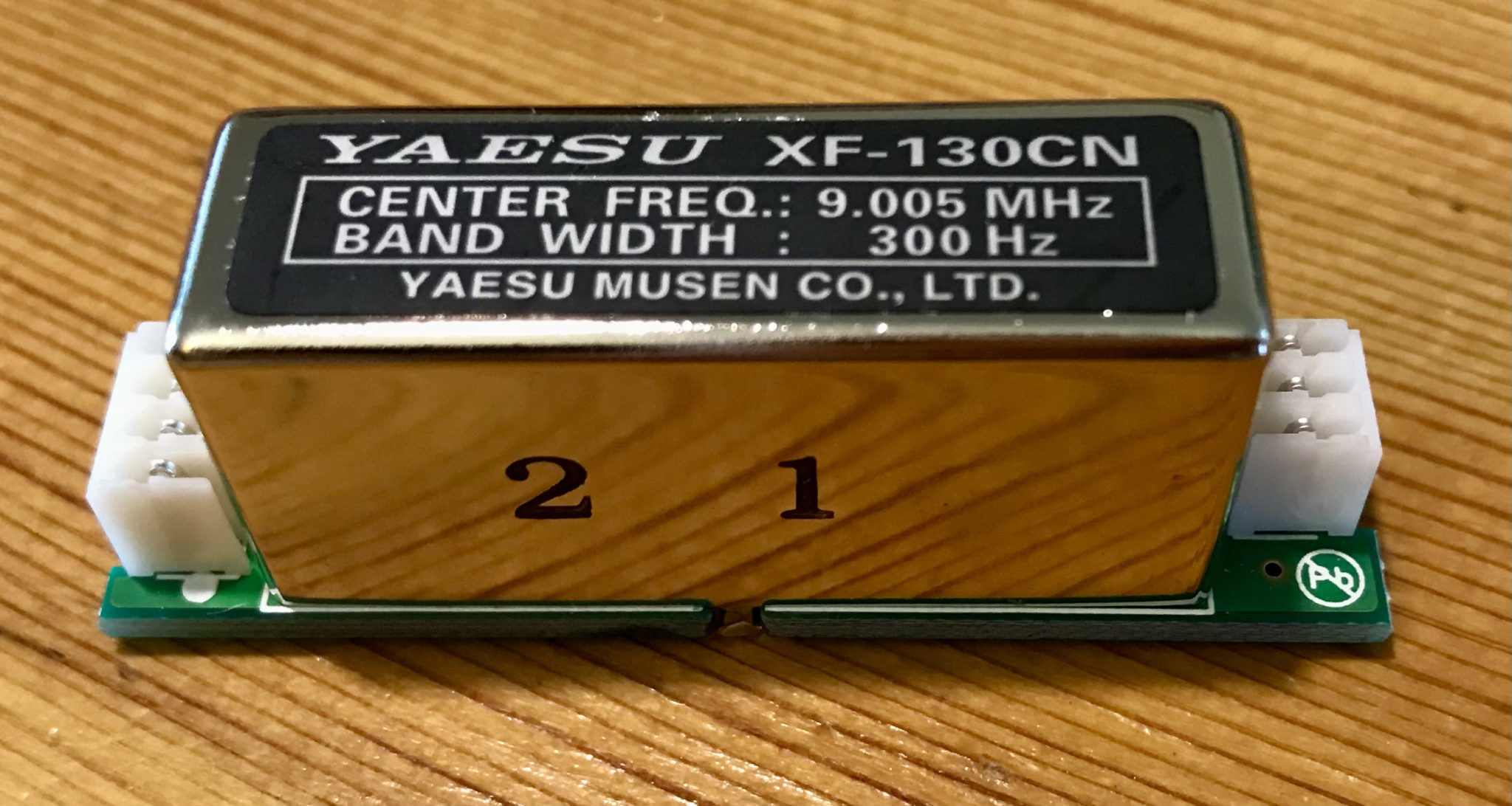
Yaesu XF-130CN 300hz CW Filter

Removing the cover from the FTDX10 it’s immediately apparent where the filter goes. A neat little cutout in the RF shield draws your eye immediately to the spot.

Cutout in the RF shield for the optional 300hz filter

Fitting the filter is easy enough however, you do have to take care to move the little black wire to one side otherwise it gets caught under the filter and stops it from seating properly onto its connections. There’s not a lot of slack on the wire either so care is needed to not pull it too taught.

Note the black wire on the right hand site of the connections for the 300hz filter

I was surprised to see how small the standard 500hz filter is in comparison to the optional 300hz filter.

Optional 300hz filter next to the factory fitted 500hz filter

With the filter safely in position and seated perfectly I had the cover and 9 screws back on in no time at all and then got the radio powered up to check if the menu system had the option of a 300hz filter in CW mode.
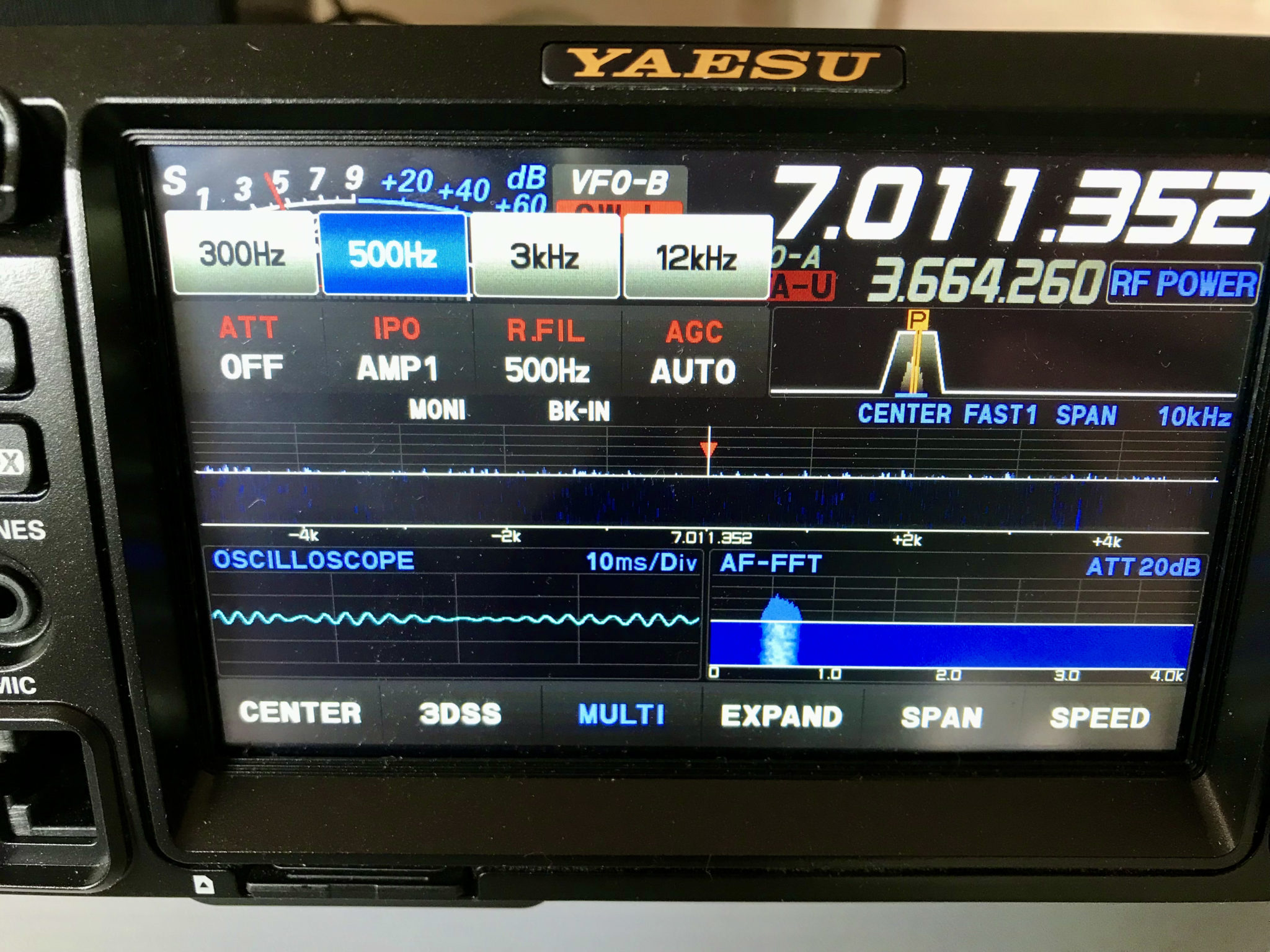
FTDX10 CW filter menu with 300hz option

Getting on air the filter makes quite a difference to the amount of background noise when listening to weak DX stations. Adding DNR and APF to the equation removes all background noise completely with the 300hz filter making it possible to hear the weakest of CW stations and complete silence in-between.

The bands aren’t in particularly good shape today however, I tuned around on the 20m band and found W7SW in Phoenix Arizona calling CQ. He wasn’t particularly strong but, it was a good opportunity to experience the difference between the filters without any DNR or APF enhancement.

Short video showing difference between 500hz and 300hz filters with W7SW calling CQ

Unfortunately W7SW disappeared before I could make another short video with the DNR and APF on to show the difference. I’ll revisit this again soon and get some video snippets up showing the difference the optional 300hz filter makes with DNR and APF.

More soon …
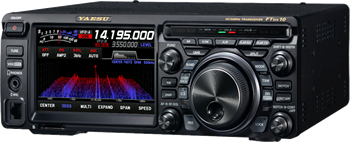
New radio ordered!

Yaesu FTDX10

After much research and decision making I finally decided to purchase a Yaesu FTDX10 HF/6m transceiver. Out of all the radios on the market and there are many, this is the one that I’ve decided has the functionality I need and gives the best performance for the money.

I really liked the little Icom IC705 but, it’s a lot of money for a QRP radio and performance wise isn’t as good as the FTDX10.

I also liked the Icom IC7300 but, this is now a 7 year old radio (at the time of writing this) and the tech has moved on substantially since then.

The FTDX10 is a hybrid SDR radio that combines the best of both worlds to give a performance level that exceeds many of the other transceivers on the market today. Ranking 3rd on the Sherwood Engineering Receiver Test Data it’s a great radio for the money.

The other thing that really impressed me with the FTDX10 was the DNR and Contour noise reduction functionality. Watching videos online it is amazing how when these two tools are used correctly together extremely weak CW signals can be recovered on a noisy band.

So, with the radio ordered from Martin Lynch and Sons I now need to start building some antennas and impedance matching circuits so that I can get on air once the transceiver arrives.

More soon …

New Radio

Sometime back I decided to sell all my HAM radio equipment as I’d completely lost interest in the hobby and decided to utilise the money to build a custom motorcycle. (Yes I build and ride motorcycles http://www.trailsoftheunexpected.co.uk ). Selling all the equipment raised a few thousand pounds which covered the cost of building the motorcycle.

So after a 10+ year break from HAM radio I’ve decided to get back into it, this means I need to buy a transceiver. The HAM radio market has changed considerably over the time I’ve been away from the hobby and there are a lot more manufacturers from China selling some interesting looking radios.

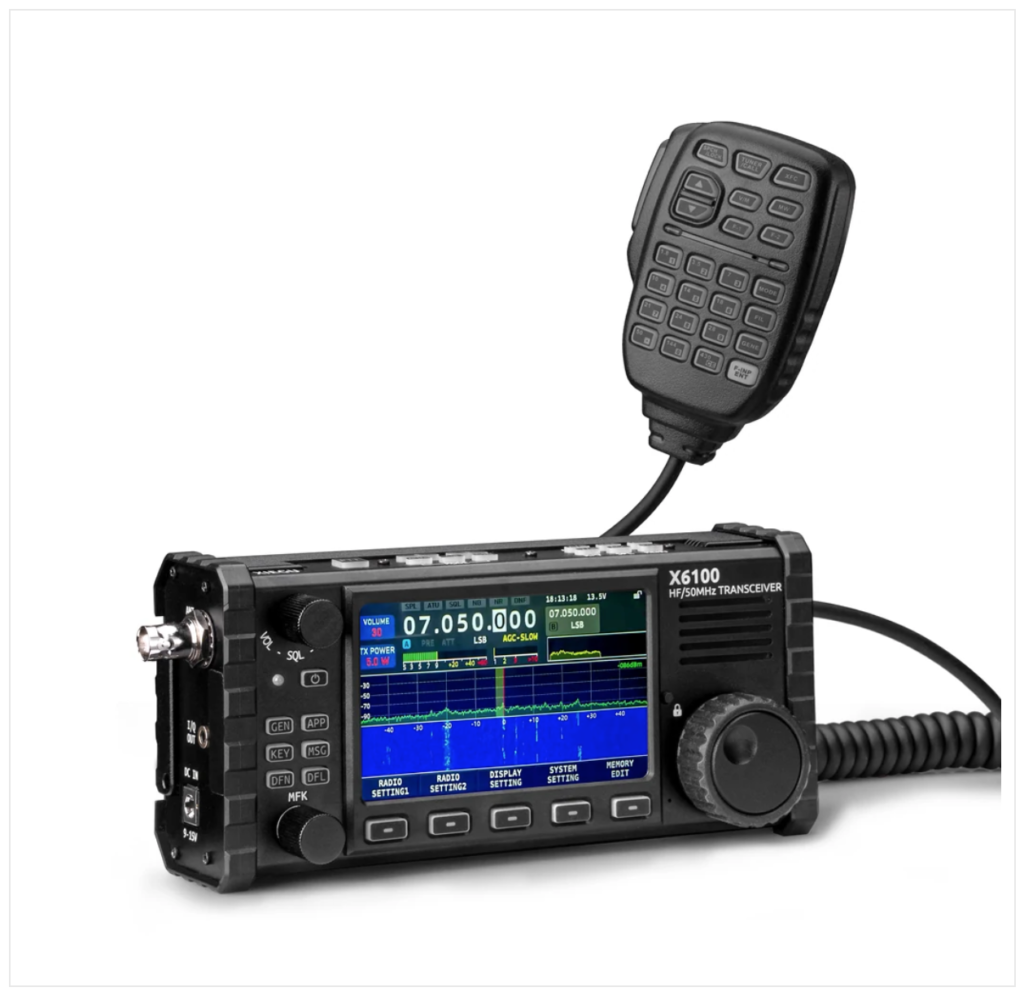
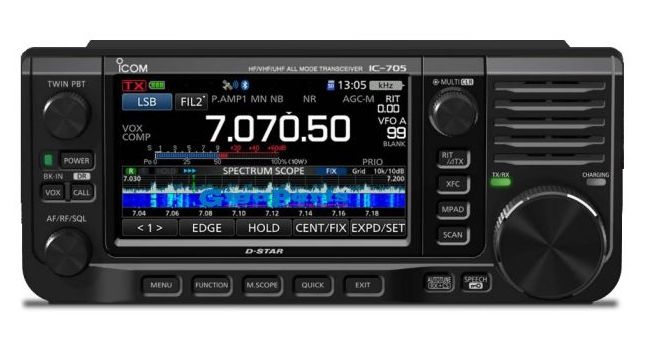
I’m currently considering two QRP transceivers, the Xiegu X6100 and the Icom IC705. These two SDR based QRP radios offer a lot of the facilities that I had with my Flex3000 and have peaked my interest for different reasons.

Firstly the Xiegu X6100 HF/6m transceiver is an Arm CPU based unit that runs a somewhat cutdown Linux operating system, being a UNIX/Linux admin professionally for many years this really appeals to me.

Xiegu X6100 SDR QRP Transceiver

This little radio has a small colour screen that displays the normal waterfall, VFO frequency and more however, it’s not a touch screen which is a shame. The plus for this radio is that it has a built in ATU, amazing considering the size of the unit.

I’ve joined the TOADS Discord group that are actively working on the O/S side of this little radio together with the manufacturer to try and get the code released into the Open Source world so that a community group can start developing it to its full potential. There’s some interesting reading in this group from some very knowledgable people and is well worth joining if you’re considering buying this radio.

Sadly the current firmware for the radio is very buggy and a fair bit of the functionality doesn’t work but, overtime I’m sure this will be resolved however, it’s a concern especially since it will be my only radio.

I’ve not been able to find any receiver test details for the transceiver so I’ve no idea how it performs. Since I’m only looking to use weak signal modes having a good receiver is paramount and is top of my list of priorities at the moment.

At £589.95 it’s at the lower end of the price spectrum for SDR radios but, it’s still a fair chunk of money to spend if it turns out problematic.

The Icom IC705 HF/6M/VHF/UHF QRP SDR transceiver is getting rave reviews and has a huge following. Coming from a long standing radio manufacturer you just know that this radio is going to be a high quality device that will just work out of the box.

With a price of £1299.99 here in the U.K. it’s more than double the price of the Xiegu X6100 but, it covers the VHF/UHF bands as well as the HF/6m bands and has a touch screen with GPS built in, there’s a lot packed into this little package!

When I look back at the little Yaesu FT817 I had years ago and how much fun I had with it, the Icom IC705 takes QRP radio to a new level.

What I really need to do is visit a HAM Radio store and sit down and try out these two radios side by side. Sadly the nearest store is over a hundred miles away!

Hello world!

Welcome to the new M0AWS Amateur Radio website.

I’ve been out of the hobby for 10+ years now and am only now starting to get back into Amateur Radio.

I lived in France for some time and was on air using the callsign F5VKM. Having many acres of land I was spoilt with large home built full wave vertical Delta loop antennas for most of the HF bands.

I’ve spent a lot of time on the 160m to 30m bands, mainly CW and digital modes but, since moving back to the U.K over 10 years ago I never bothered setting up a station again as I have a limited size garden and antenna unfriendly neighbours.

Having retired I was planning on travelling the world on my motorcycle but, since the world has been in the grip of the COVID19 pandemic since 2020 those plans have been put on hold.

Being stuck at home a lot due to various lockdowns and rampant infection rates I’ve decided that now is a good time to get back into radio!

At present I have nothing, no radio, no antennas, no PSU, no coax, nothing, so I’ve got a long way to go!

I’ll be designing and building all my own antennas and matching circuits and will be posting article on here showing my progress and results.

I’ve started researching radios and will definitely be going SDR and low power (QRP). Digital modes and CW will be the only modes I’ll use and power will be 5w or less.

I’m hoping to document things here as I build the new station so please drop by from time to time and see how it’s going.

More soon …