Simple EFHW vertical on 20m works great!

I completed the fine tuning of the 20m EFHW Vertical today, I got the SWR down to 1:1 at 14.10 Mhz. This gives me a perfect match for the CW and digital section of the band with the SSB part of the band not exceeding 1.4:1 at 14.350.

I ended up removing 34.5cm of wire from the original antenna length to get the resonance where I wanted it. This was caused mainly by the extra inductance added into the circuit by the 49:1 Unun. This is to be expected and perfectly normal when feeding an antenna via an impedance matching transformer.

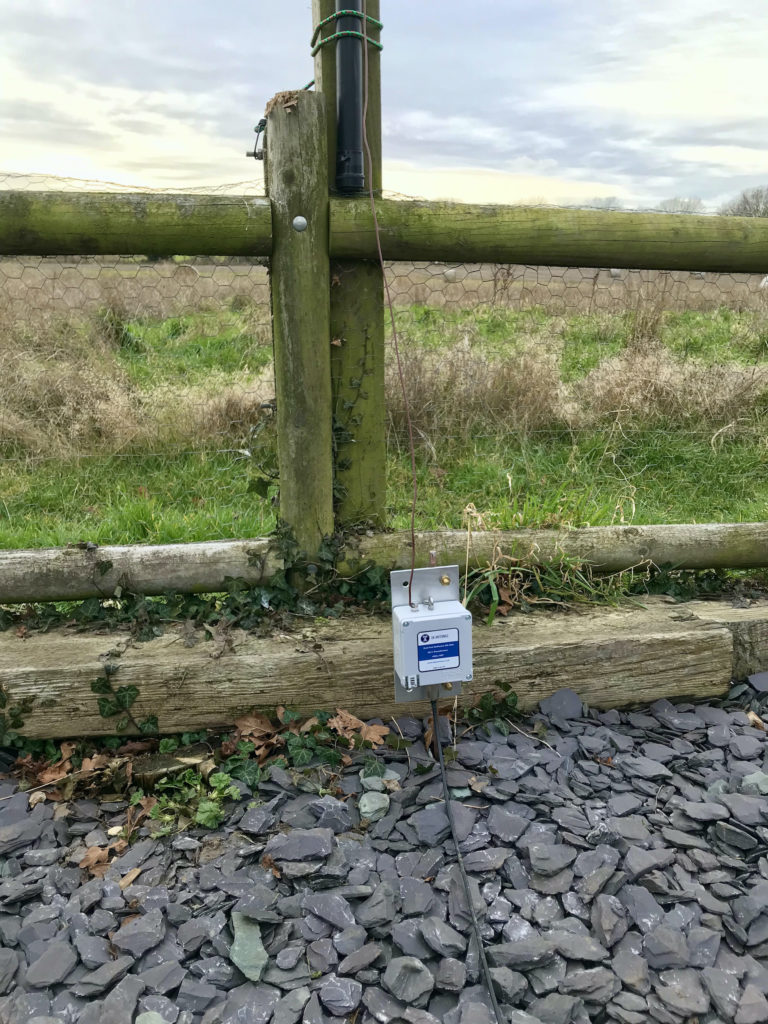
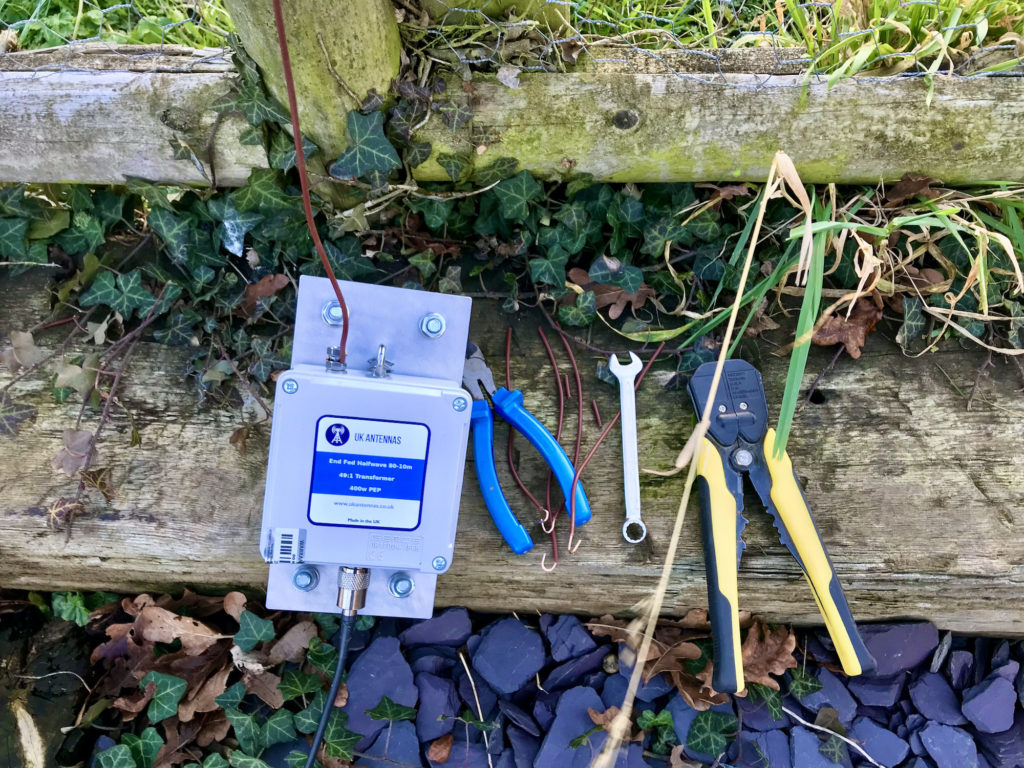
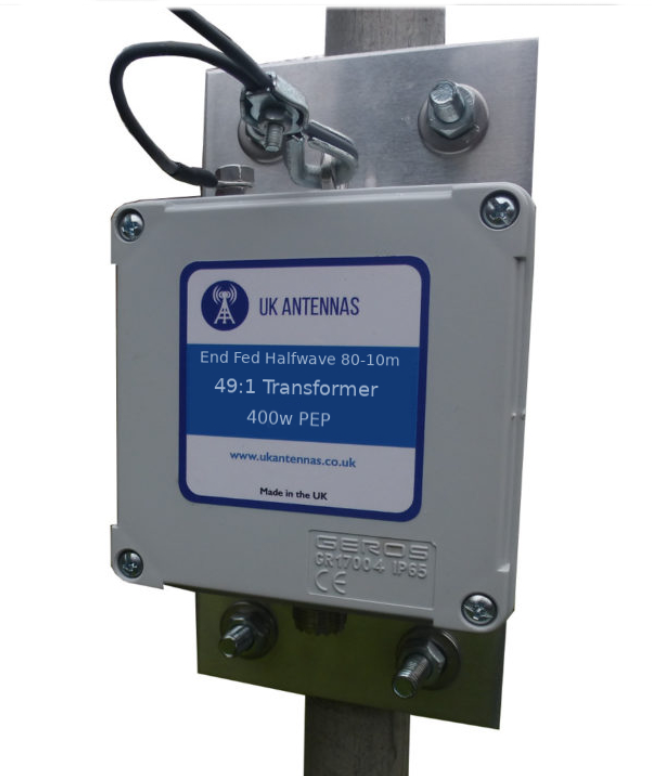
I bolted the 49:1 Unun directly to the earth rod, this way it’s got a solid earth connected directly to it to keep the resistance to a minimum. (The metal mounting plate is also the earth termination point).

49:1 Unun mounted on earth rod directly

I spent some time today chasing the DX on the 20m band using the FT8 digital mode.

The fun started with VK2LAW in Sydney Australia, followed by E25ETT in Thailand, KP4CAR in Puerto Rico, 9G5AR in Accra Ghana and The Sahrawi Amateur Radio Club station S01WS in Western Sahara. A nice mix of stations dotted around the world.

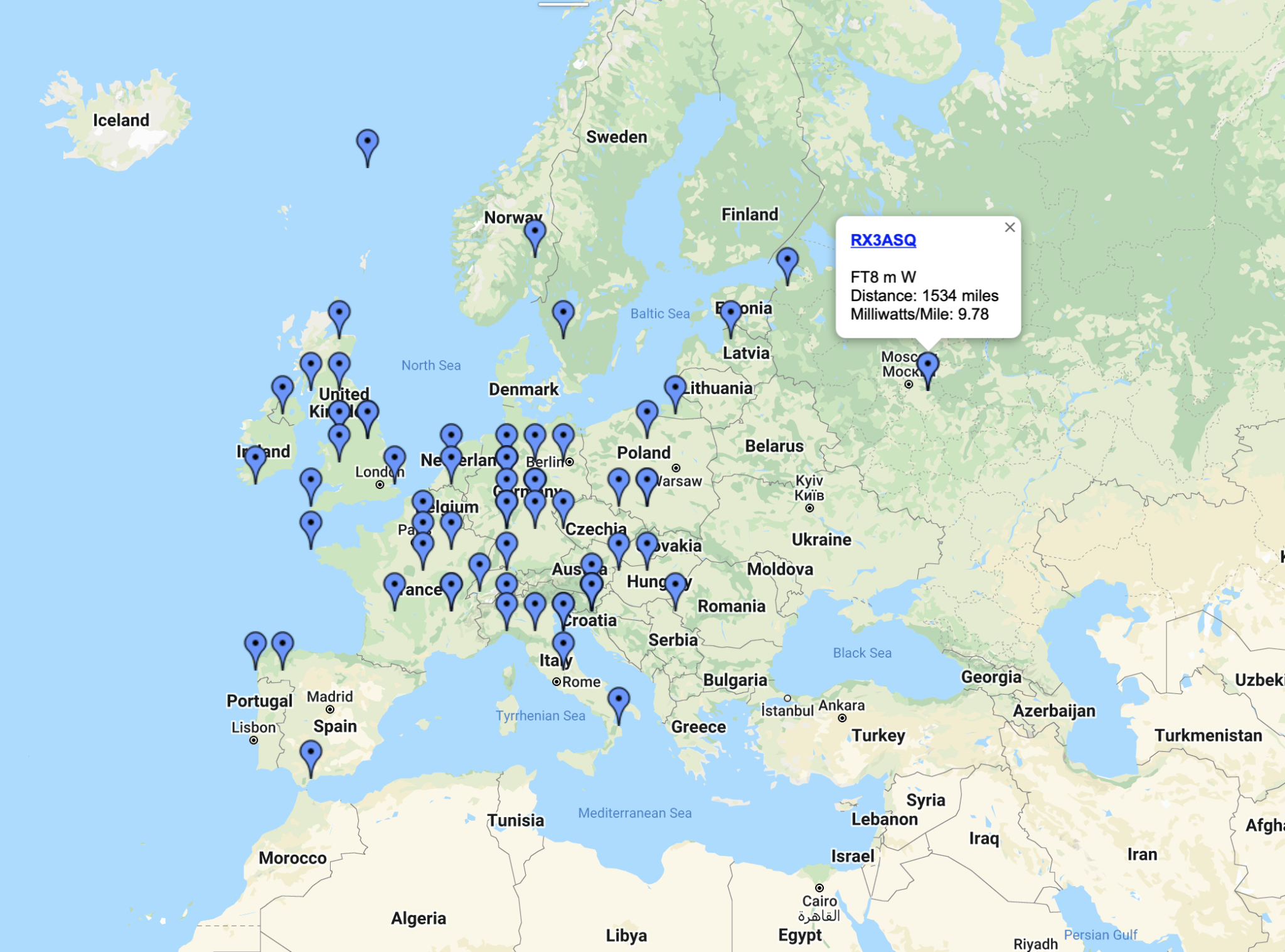
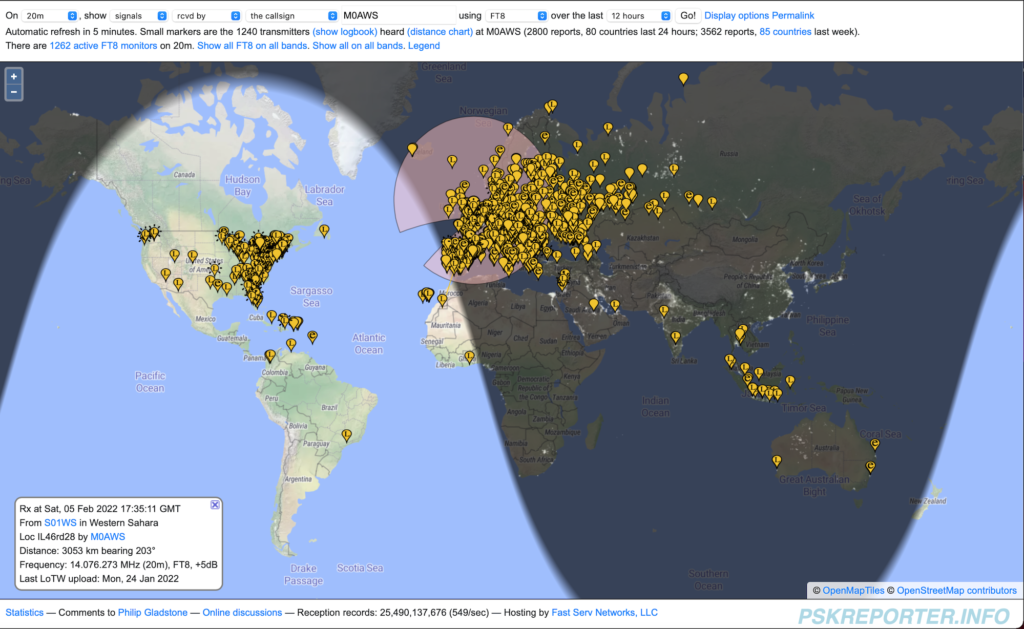
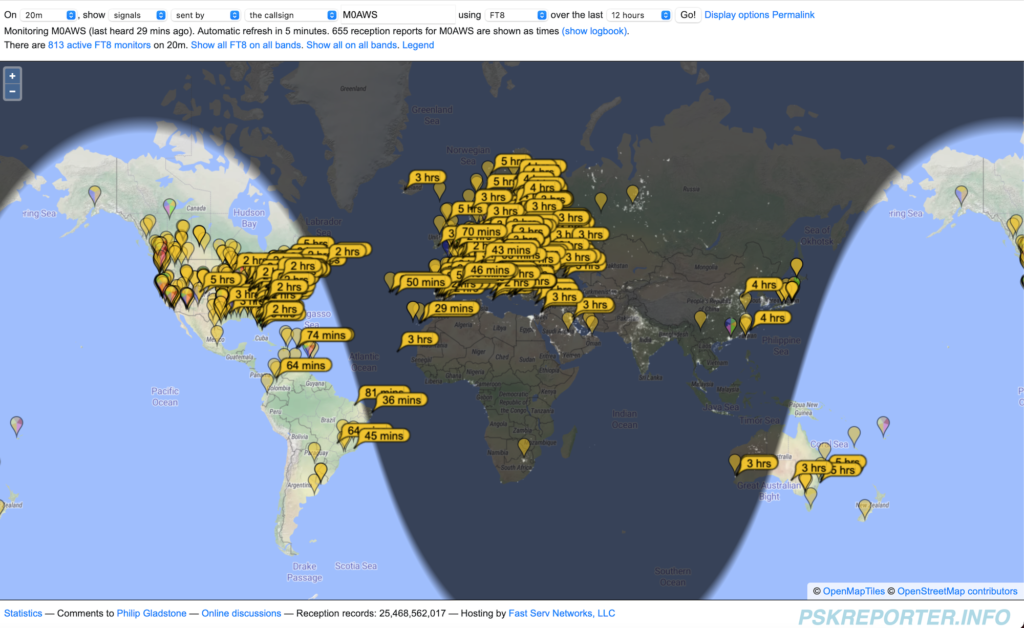
PSKReporter map showing all the stations that I heard on 20m today

I like to keep an eye on the PSKReporter site whilst on air to see what I’m hearing. As you can see I heard stations from the West Coast USA right across to New South Wales in Australia and down south as far as Brazil. The 20m EFHW Vertical antenna and Yaesu FTDX10 radio combination really does have good ears

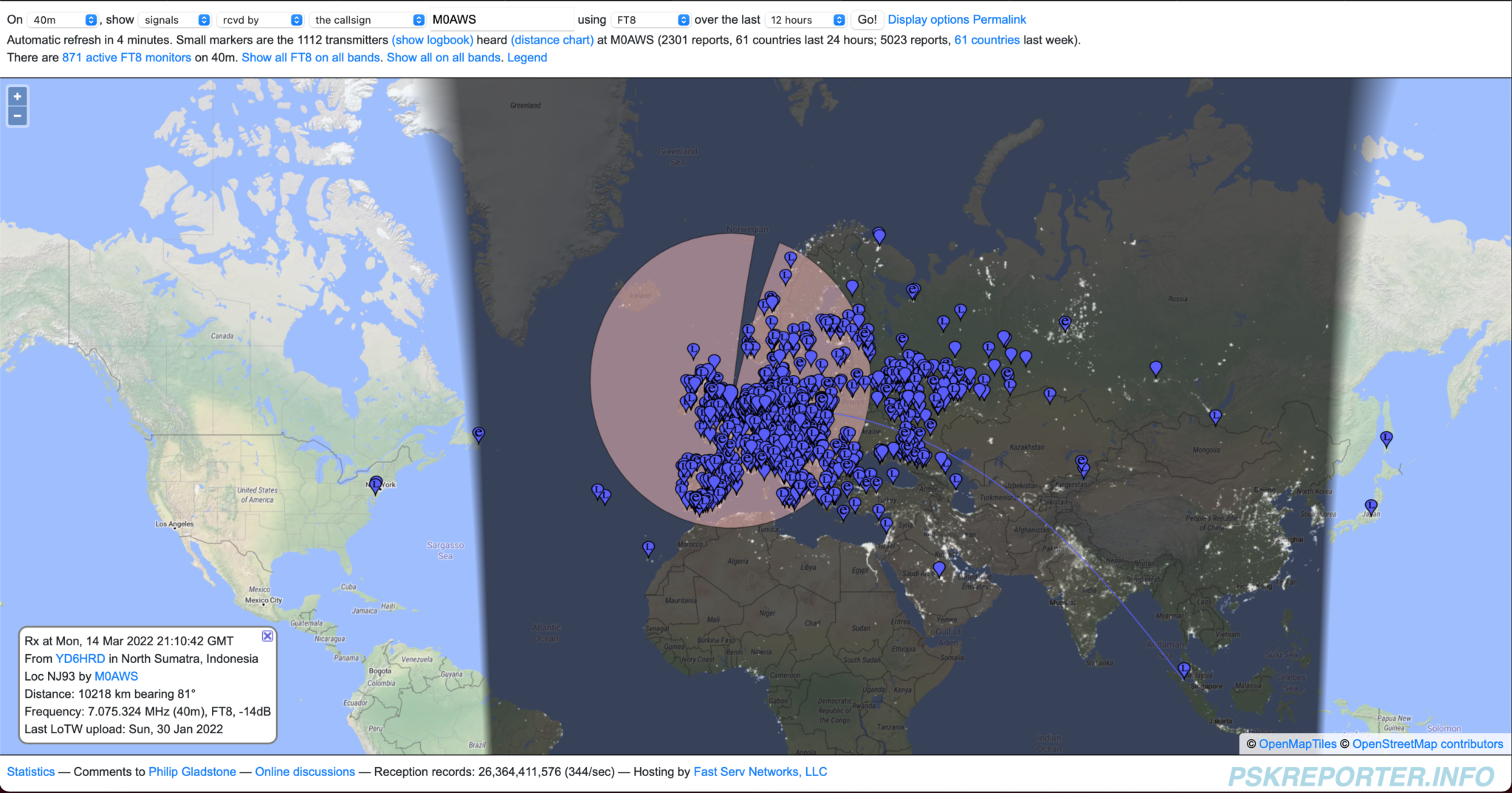
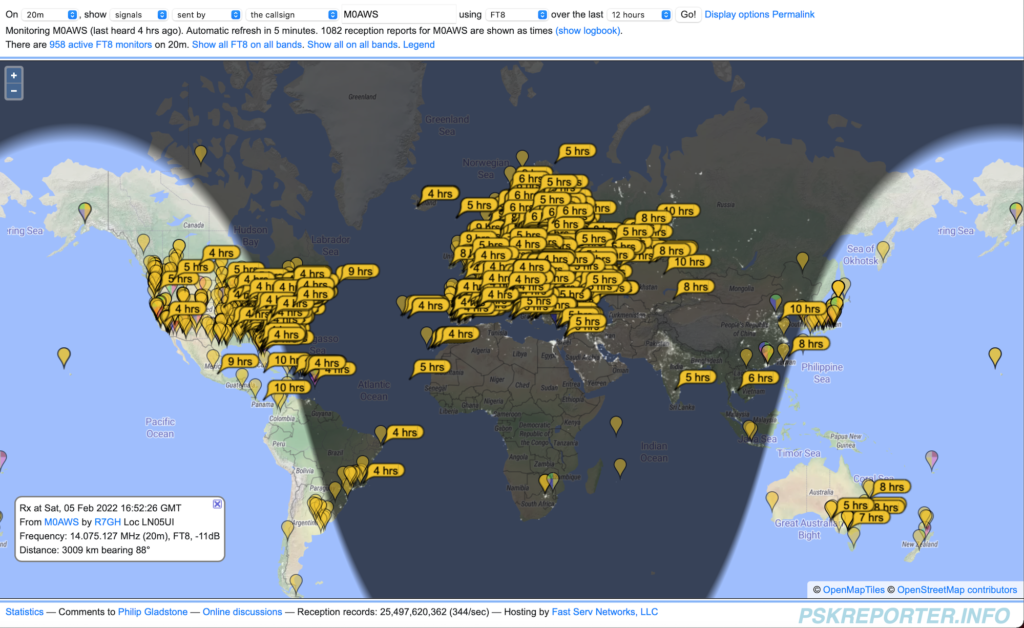
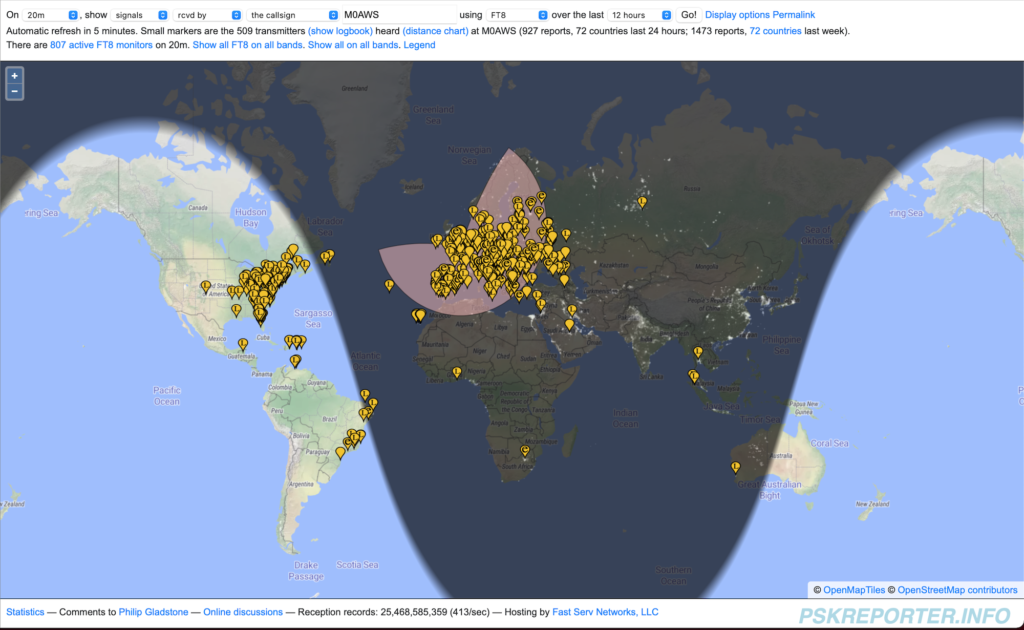
As for being heard, well it’s a similar story, below is a map showing all the stations that heard me as reported on the PSKReporter website.

Stations that heard M0AWS on 20m FT8

One again, great global coverage from the antenna and transceiver combo with only 20w being used for most contacts. (25w used to break some of the pileups!)

Overall I’m really pleased with the performance of the antenna, for such a simple design it works exceedingly well. One huge advantage of a half wave over a quarter wave antenna is that the point of max current is 50% along the antenna’s length, on the 20m band EFHW Vertical this puts it some 5m above the ground lowering the angle of take off and making it a great DX antenna.

If you’ve not got a lot of space but, want to work the DX on 20m then I highly recommend you give one a try, I’m sure you’ll be amazed at how well it performs.

Can’t wait to get a 40m EFHW Inverted L up next!

Information as to why it’s best to keep the feed point at ground level for this antenna is here.

More soon …

20m EFHW Vertical + 49:1 Unun = DX

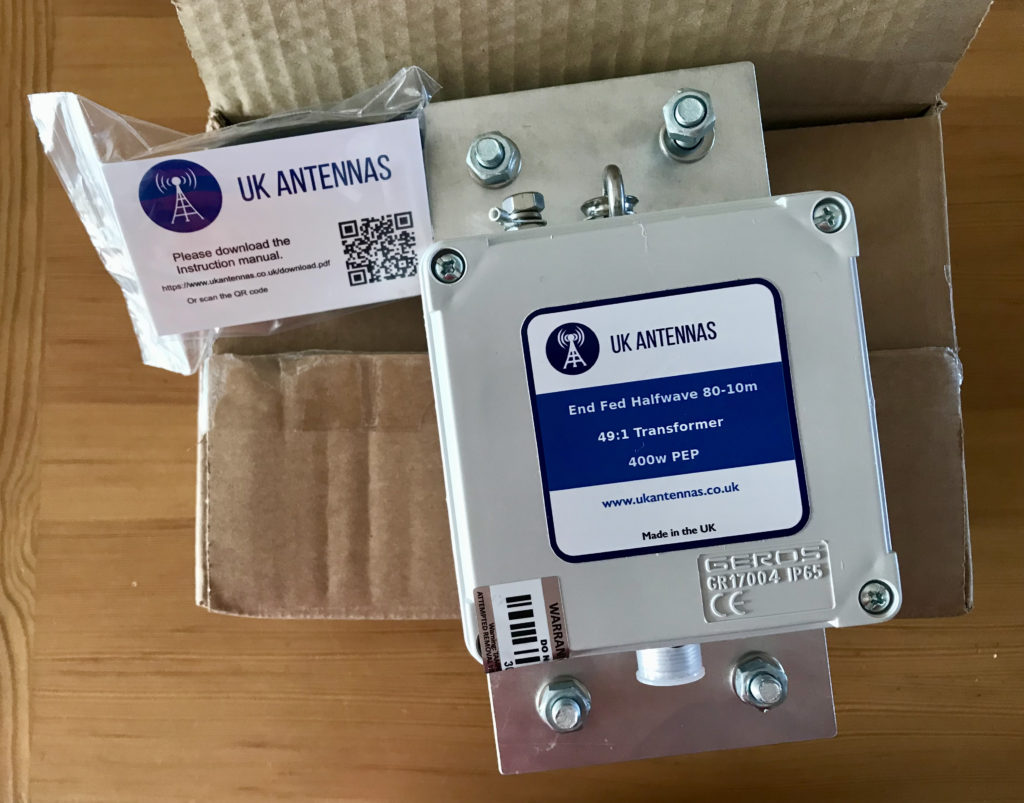
My 49:1 Unun arrived from UK Antennas today, lost no time getting it into the garden and connected to the 20m EFHW Vertical antenna.

49:1 Unun from UK Antennas

I’m really pleased with the 49:1 Unun, really nicely put together and packaged professionally, great to get such a nice British made product!

Connecting the Unun up to the antenna I found that it added a little extra inductance I hadn’t planned for and so I needed to shorten the vertical wire a little to compensate.

Tuning the 20m EFHW Vertical

It took 3 snips of wire to get the antenna resonant in the 20m band again, with an SWR of 1.3:1 and the sun starting to set I decided that was fine for now and I’ll fine tune it tomorrow in the daylight. (See end of article for update)

Heading into the shack the 20m band was buzzing, lots of big signals and DX. I switched on to the 10m band and checked the SWR there, 1:1 across most of the band, perfect!

I then went on to check the 15m band, now I wasn’t expecting a match as it shouldn’t resonate there but, I found a 2:1 SWR across the band, weird!

So back on 20m, I plugged in the MacBook Pro and started WSJT-X in FT8 mode to see what was around.

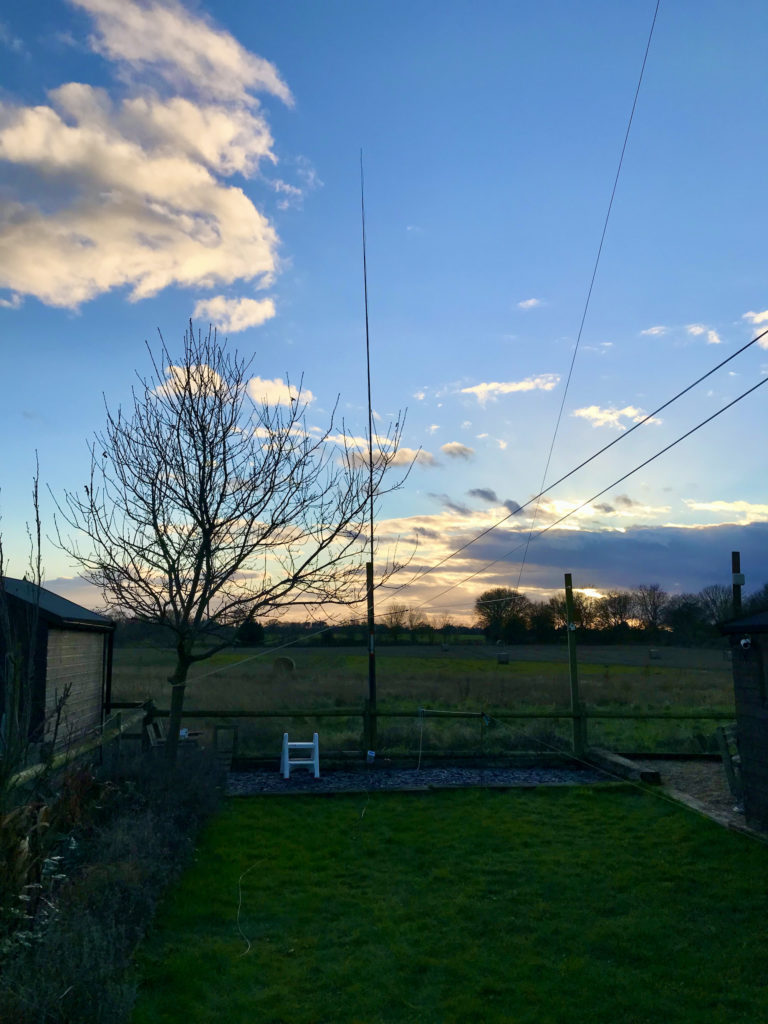
20m EFHW Vertical at the end of the garden

First contact was into Canada, VE2FVV with a -10 report both ways and 2962 miles, not bad for 20w.

I then worked a flurry of stations from the USA but, the one I was really pleased with was PP1WW in Brazil. 5610 Miles using just 20w, this EFHW vertical really does has a lovely low angle of radiation.

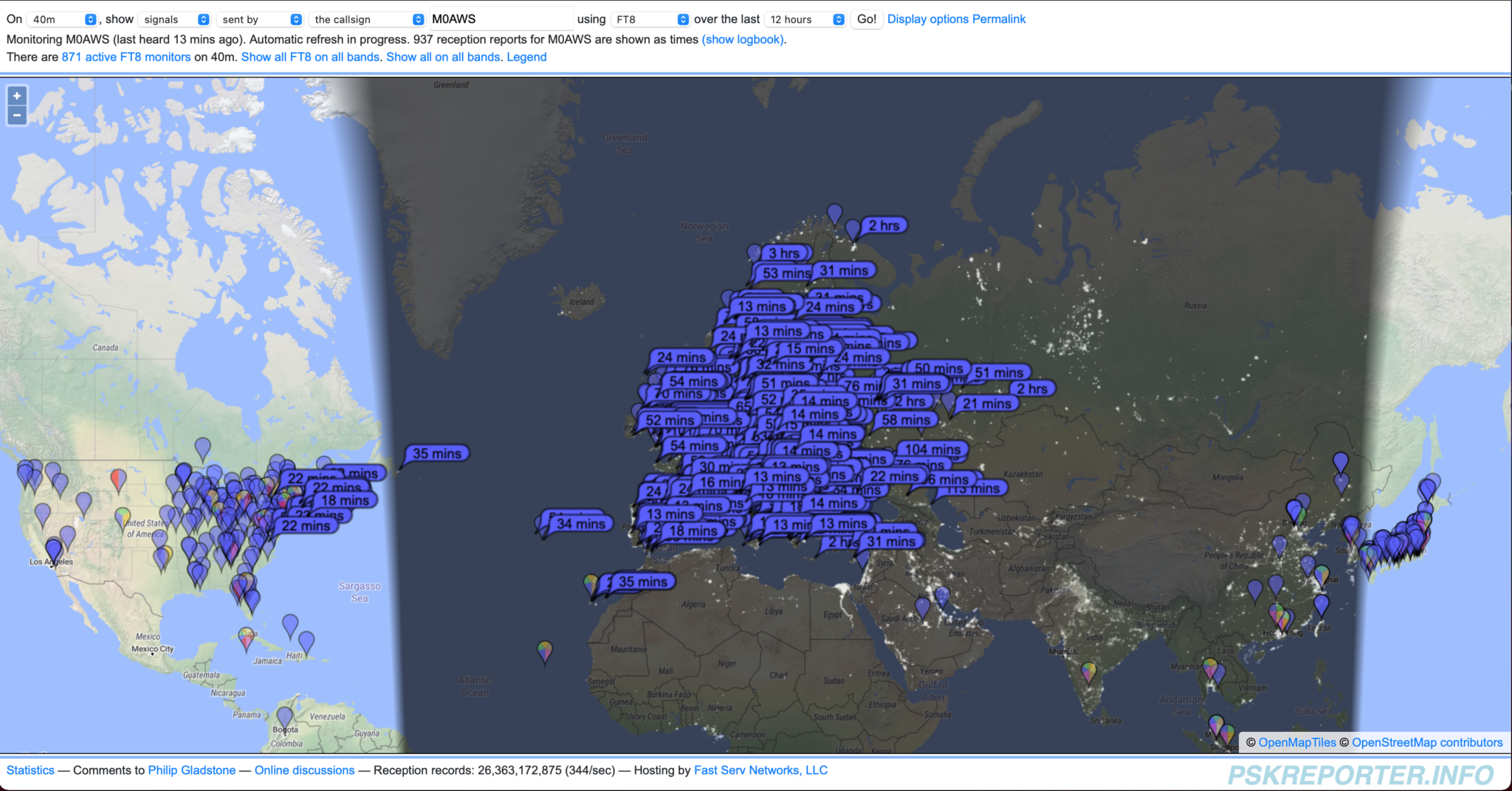
PP1WW was the last station worked as it was dark by this time and the band closed. It was interesting to watch the PSKReporter site to see where I was being heard.

Stations that heard M0AWs on 20m

As you can see from the PSKReporter screenshot above, I was heard pretty much all over the world. I saw a number of VK stations in Australia pop up on FT8 but, never managed to get an answer back from any of them even though they reported hearing me on the PSKReporter site.

I was also pleased with the number of stations that I heard, once again good global coverage.

Stations heard by M0AWS on 20m

Band conditions are generally poor at the moment and we’re in a bad part of the 11 year sunspot cycle. Hopefully in the coming years propagation will improve and we’ll be able to work the world on just a couple of milliwatts!

I also tuned up onto the 10m band and heard quite a few FT8 stations on there, I was surprised as I wasn’t expecting the band to be open.

So tomorrow, I need to fine tune the antenna for the 20m band and get the SWR down to 1:1, hopefully this won’t affect the 10m band tuning too much.

Once the 12m Spiderpoles are back in stock I’ll get one ordered and build the 40m EFHW Inverted L that I’ve designed, I’m hoping it will open up the 40m/20/15/10m bands for some DXing over the summer months.

UPDATE: I ended up snipping off a total of 34.5cm of wire to get the SWR 1:1 at 14.100Mhz. This makes the entire 20m band useable with the SWR less than 1.5:1 at each end of the band. 2nd contact after trimming the wire was VK2LAW at 10454 Miles using just 25w of power.

Information as to why it’s best to keep the feed point at ground level for this antenna is here.

More soon …

Going up in Frequency!

Ever since I got my Class A HAM Radio licence I’ve always been fascinated by the low bands.

160m, 80m and 40m have been my favourite go to bands for chasing DX for many years and I’ve really enjoyed overcoming the challenges that come with such low frequency radio operations. Working DX on 160m I learnt a lot, having a good receiver and a quiet antenna are far more important than having a lot of power. The QRM/QRN on top band often masks the weak DX signals and so designing and building antennas that have a relatively low angle of radiation but, are super quiet on receive is a skill that all top band DXers should embrace.

It’s particularly hard to work DX on 160m in the summer months however, all those DX signals are still there, they’re just masked by the static crashes that plague top band throughout the warmer months.

Discovering the grey line was a real eye opener too. Getting up early in the morning to catch that magic moment that starts just before the sun rises to about an hour afterwards, with DX signals pouring in from VK/ZL before the D layer gets established again. Discovering that on the grey line signals from afar often arrive from a very high angle and can be heard much better on a large horizontal loop near the ground than a large vertical.

As you can tell, I’m passionate about the low bands but, now I’m back in the U.K. and have a U.K. sized garden again those days of large full wave antennas on the low bands are gone and so I must look to pastures new.

To this end I’m going to get onto the higher frequency bands, 20m and upwards. I must admit that I’ve hardly used these bands as I’ve always been so focused on the lower bands.

Currently I have delta loop for 30m up in the garden, this is a great band for us CW and digital guys, it’s a band I really enjoy and so will continue to use it whilst discovering the higher bands.

So I thought I’d start with the 20m band, it’s a band that I’ve heard is really easy to work DX on. Being much quieter than the low bands I’ll give the delta loop antennas a rest and venture into the land of vertical antennas again.

Doing some antenna modelling on EzNEC the End Fed Half Wave (EFHW) antenna has a great radiation pattern with a nice low angle of radiation and even some gain compared to a dipole.

Construction will be easy as the antenna is so small compared to the low band antennas I’ve built in the past.

20m Band EFHW Vertical Antenna

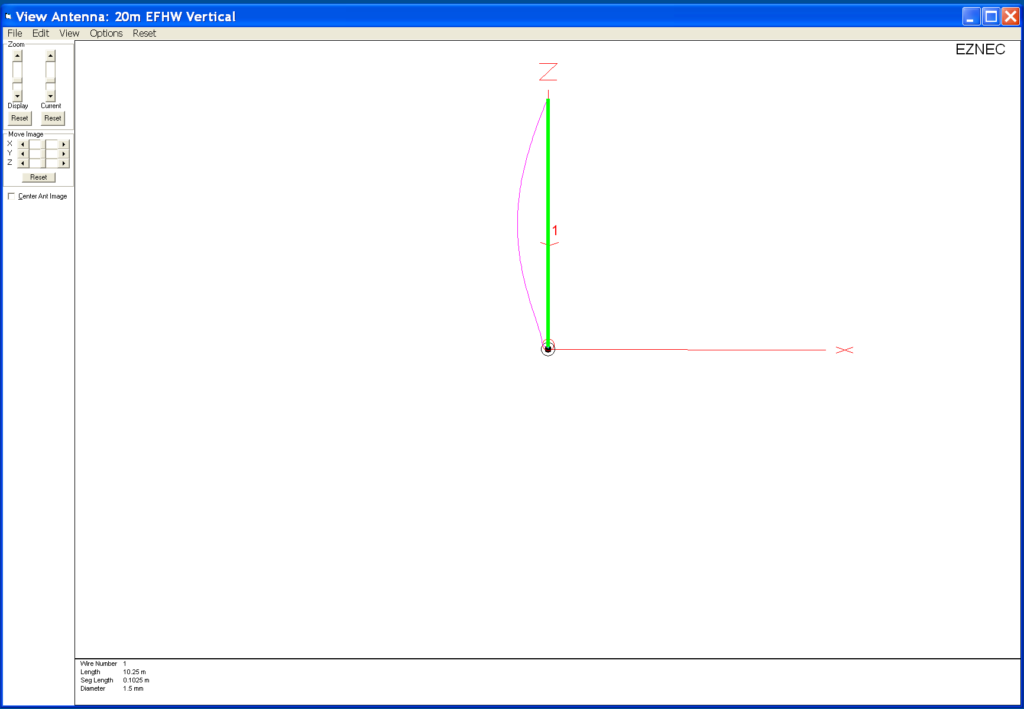
An EFHW antenna is a relatively simple affair and for 20m it’ll be somewhere around 10.25m tall depending on where on the band I resonate it.

The difficult thing about half wave or any multiple of half wave antenna is that they present a very high impedance at the feed point. Unlike a half wave dipole that is made up of two quarter wave legs that present an almost perfect match to 50 Ohm coax cable (or a 1:1 balun), the EFHW will have a much higher impedance, normally in the range of 2000 Ohms or more. Having such a high impedance also means high voltages at the ends, something to be very aware of especially if you have children or pets in the garden!

Matching to this type of antenna can be done two ways, a simple LC circuit for high impedance feed points or via a 49:1 Unun.

Since I’ve built 1:1 baluns in the past for my delta loop antennas I’ve decided to go the way of the 49:1 Unun.

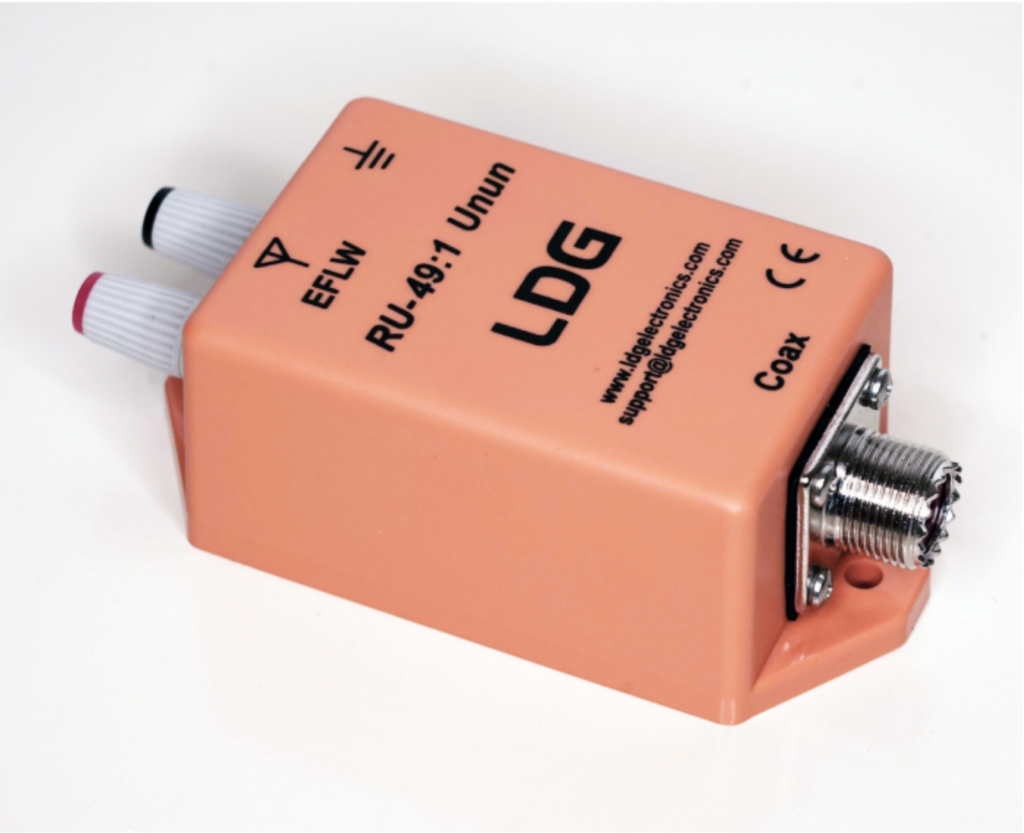
Looking online for parts to build a 49:1 Unun I stumbled across UK Antennas, they seem to have a wide selection of pre-built EFHW solutions and some very nice looking 49:1 Ununs capable of handling 400w, much more than I will ever throw at it. Contacting Ian the owner of the company via Ebay I found he has a 49:1 Unun in stock that he can ship to me next day so I decided to go ahead and order one rather than source the parts and build it myself.

UK Antennas 49:1 Unun

With the Unun sorted, let’s take a look at the radiation pattern for an EFHW Vertical on the 20m band.

Since I’m looking to do mainly CW and digital modes I’ll be tuning it for the lower end of the band.

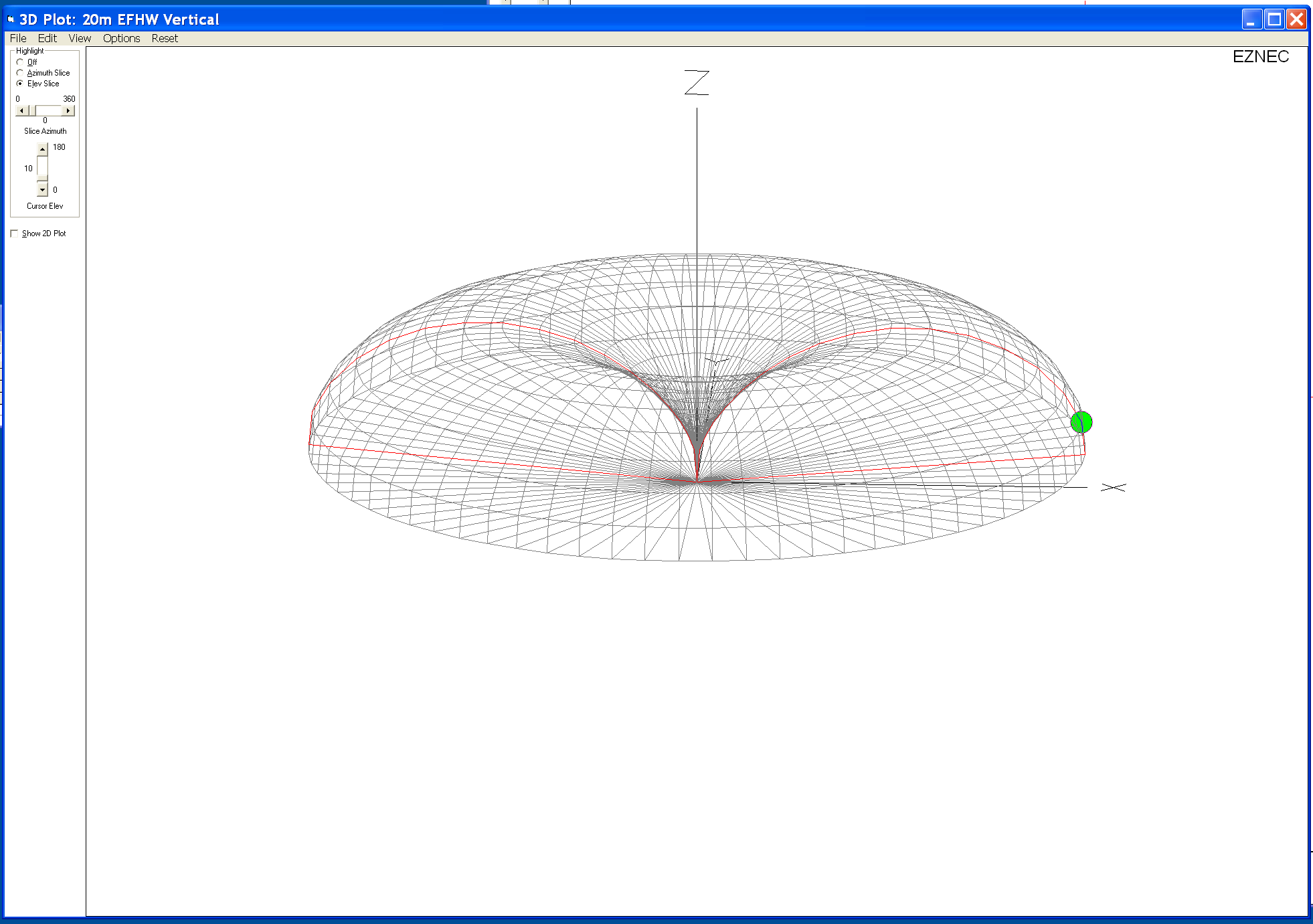
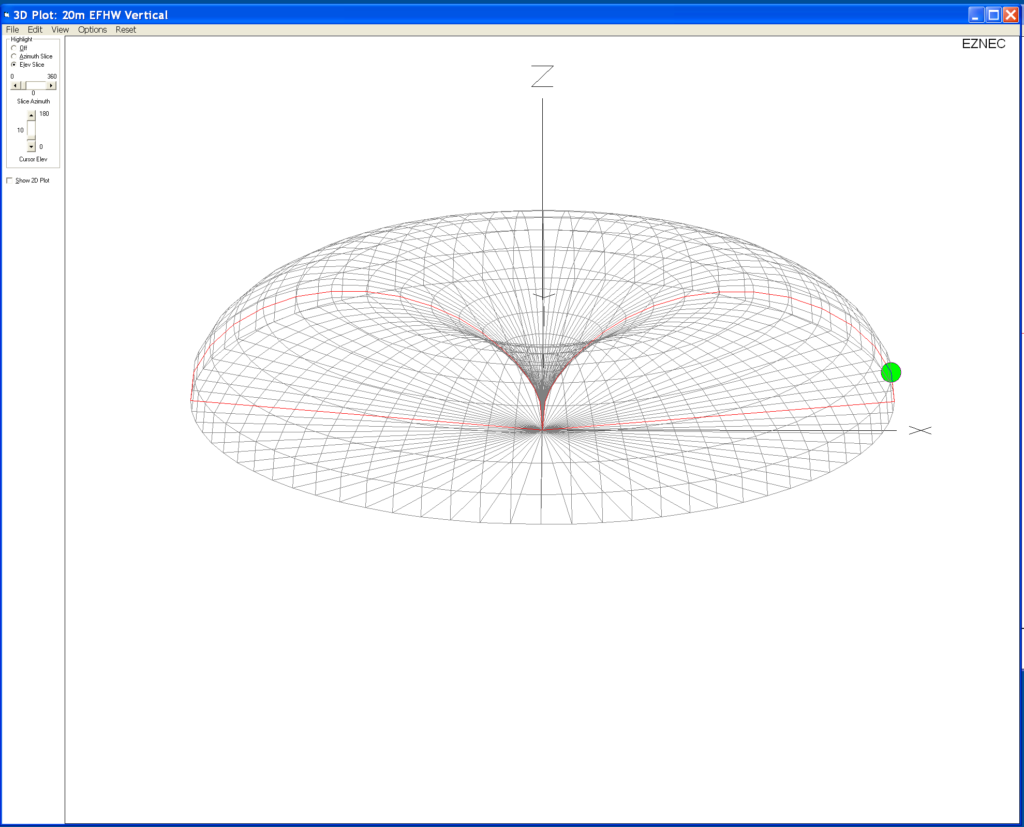
Modelling this on EzNEC I’m pleasantly surprised at the radiation pattern of such a simple vertical.

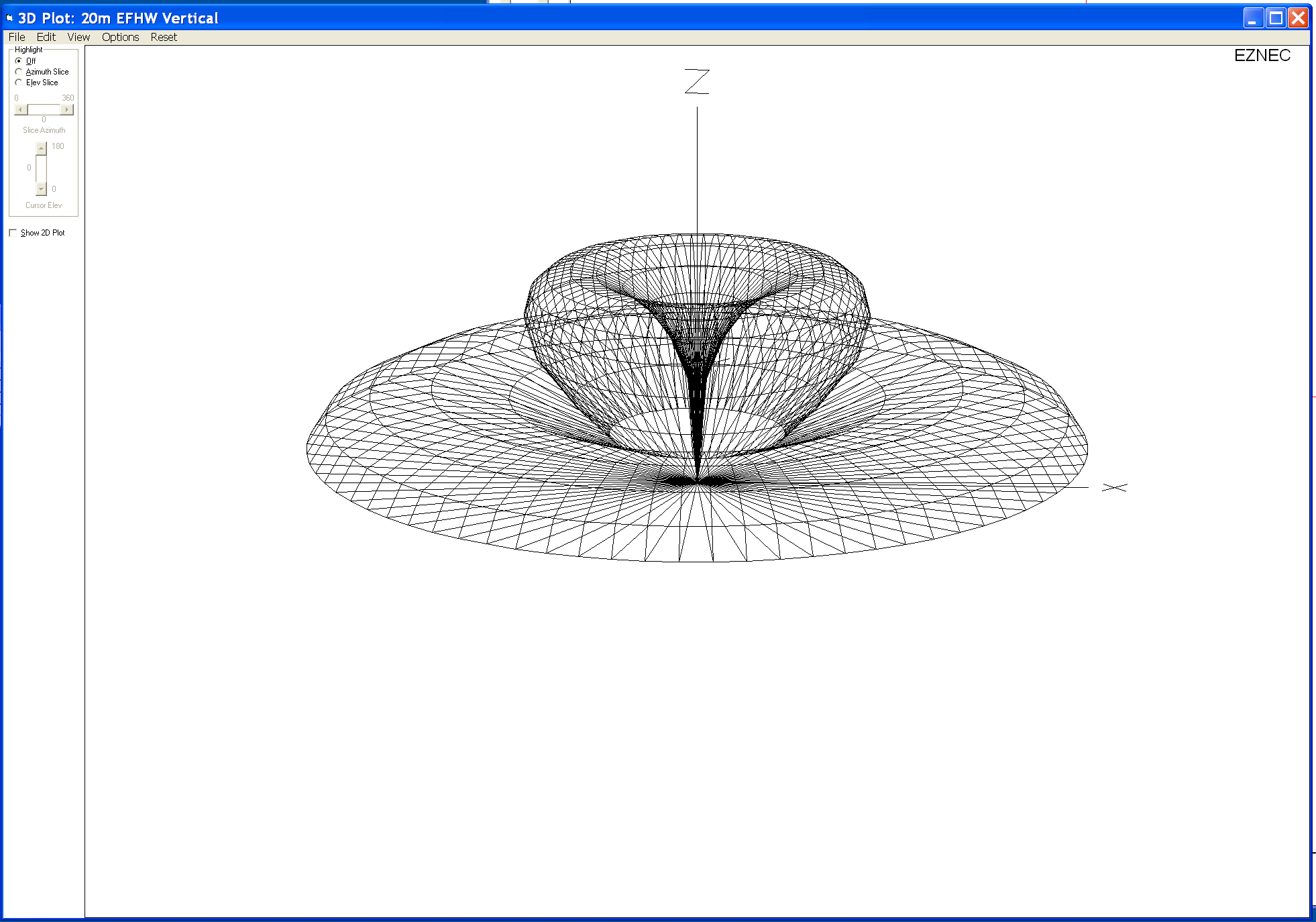
20m EFHW Vertical 3D Field Plot

To get a radiation pattern like this on the low bands requires a very large vertical, on 160m we’re talking 80m in height!

On 20m an EFHW is only around 10.25m long, very easy to put up in most U.K. sized gardens using nothing more than an extendable fibre glass pole. The 3D Field Plot shows the lovely deep null in the centre as you’d expect and a great low angle circular radiation pattern.

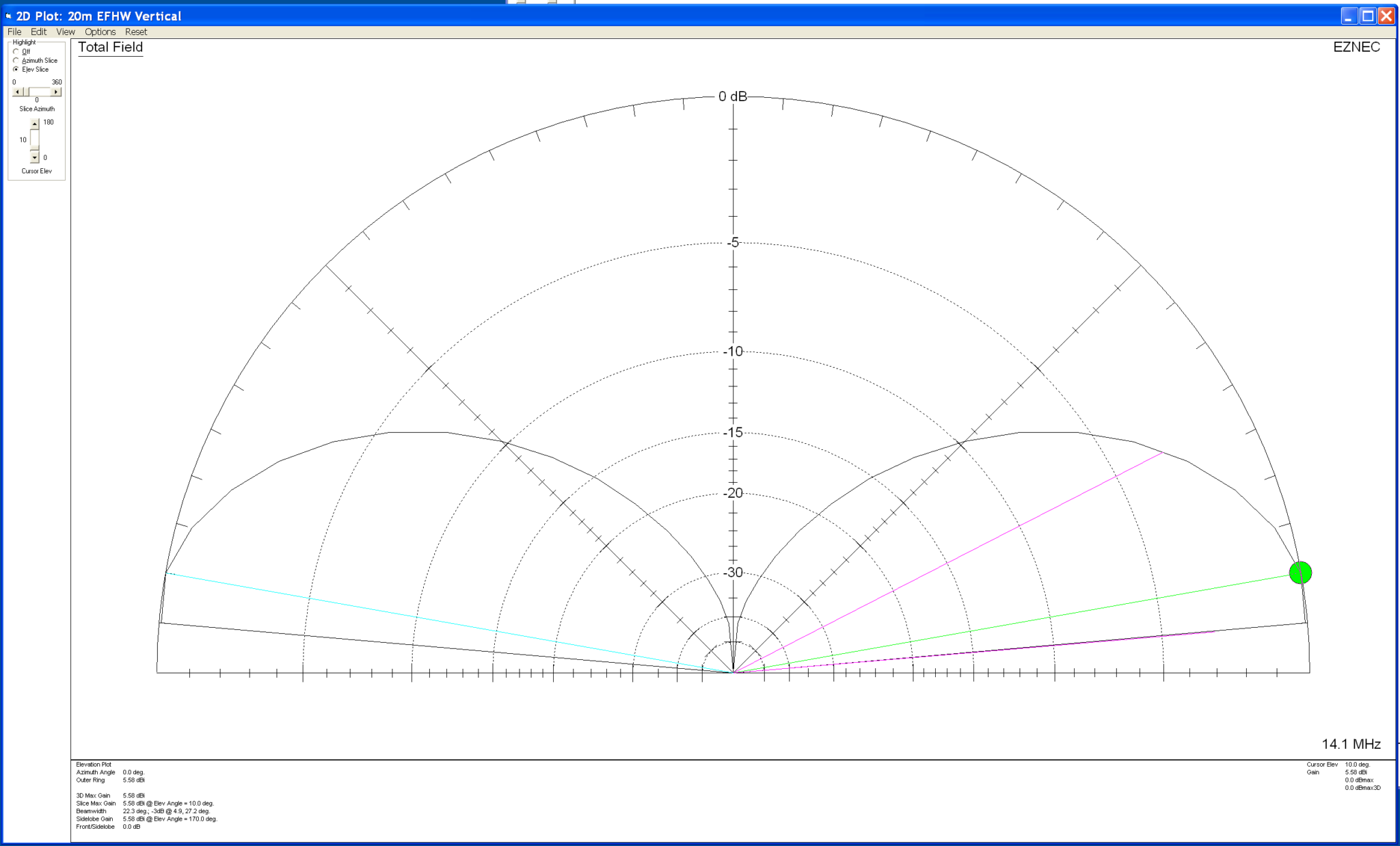
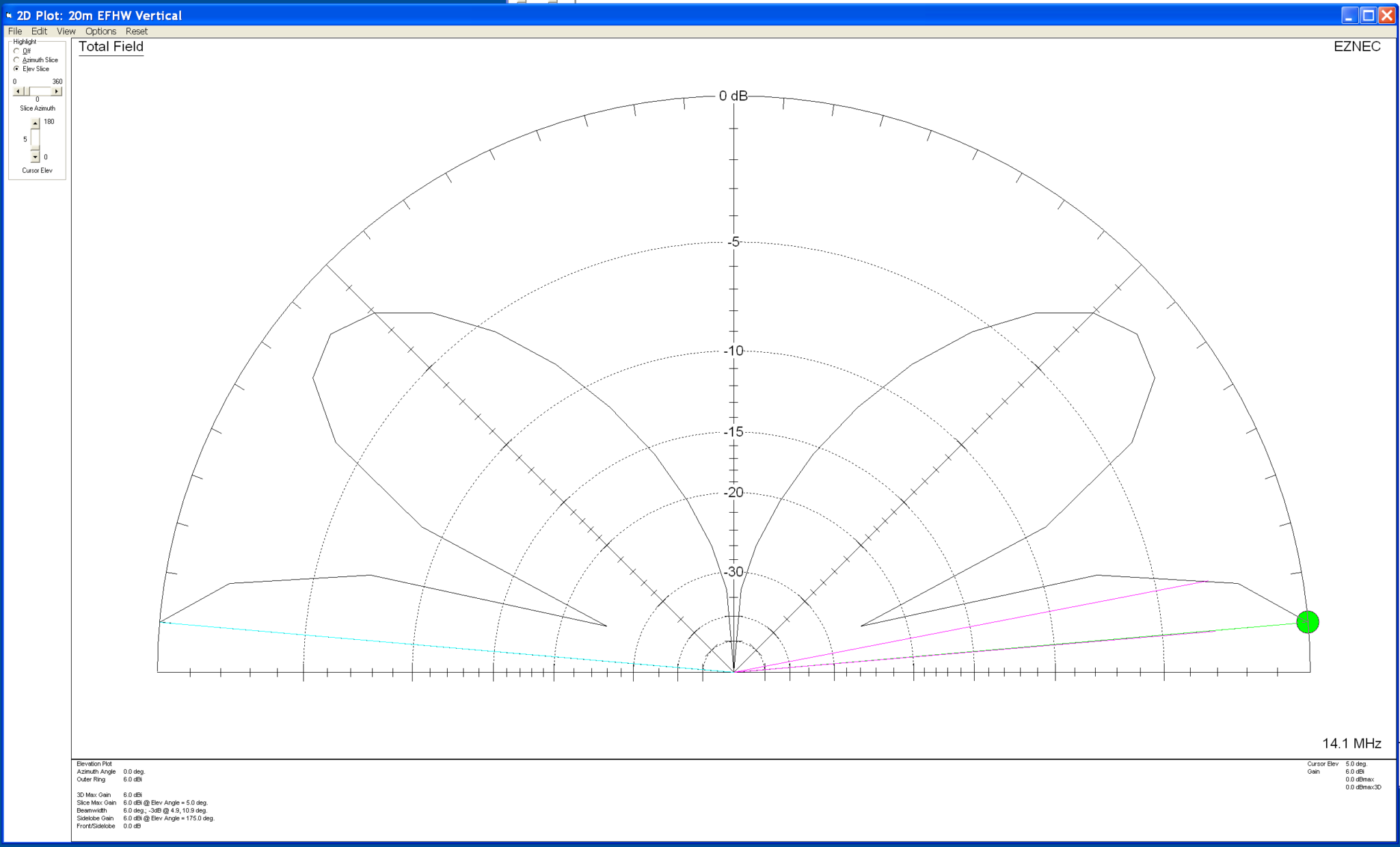
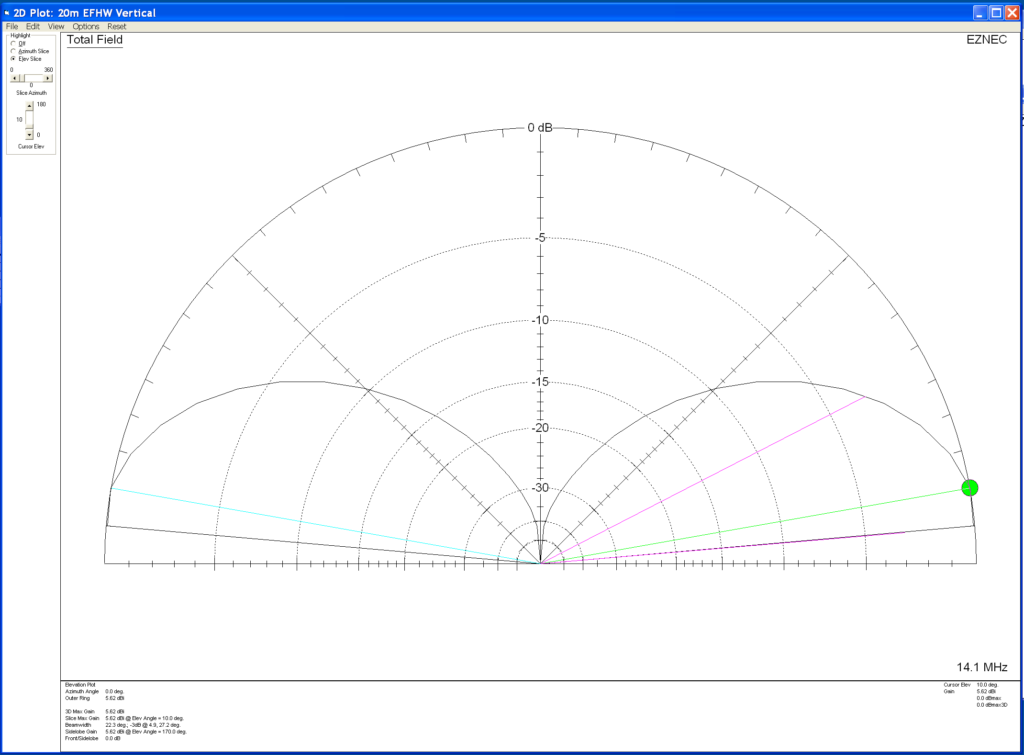
20m EFHW 2D Field Plot

The elevation 2D field plot really shows the beauty of this antenna.

5.62dBi at 10 Deg and 5.56dBi at 5 Deg, perfect for the long haul DX chaser. The wide deep null in the centre will help attenuate the signals arriving at high angles from the EU that plague us on the East Coast of the UK.

So, it’s time to go find some wire, get cutting and get a fibre glass extendable pole mounted in the garden ready for the arrival of the 49:1 Unun.

More soon ….

UPDATES:

More info on antenna performance here.

Going QRP with the 20m EFHW Vertical and IC-705

Keeping it simple but effective – 20m EFHW Vertical